
Have you ever noticed a musty smell in your home but could not find where it was coming from? Maybe a wall feels slightly damp, or you see a small water stain on the ceiling that keeps getting darker. These signs can sometimes point to moisture hidden behind walls or ceilings.
This is where thermal imaging for mold detection can be helpful. Thermal imaging cameras allow professionals to look for temperature differences on surfaces that may indicate areas of moisture or possible water intrusion. While a thermal camera does not directly show mold, it can help identify areas that deserve closer inspection.
For Texas homeowners, this can be especially useful because humidity, heavy rain, plumbing leaks, roof damage, and air-conditioning issues can all contribute to moisture problems. Understanding how thermal imaging works can help you know what to expect from professional mold inspection services.
What Is Thermal Imaging for Mold Detection?
Thermal imaging uses a special camera to detect differences in surface temperature. Instead of taking a regular photograph, a thermal camera creates an image based on infrared energy coming from surfaces.
When moisture is present, it can sometimes cause an area of a wall, ceiling, or floor to have a different temperature from the surrounding material. A professional can use these temperature differences as clues when looking for possible moisture problems.
However, thermal imaging does not actually see through walls or identify mold itself. It helps locate unusual temperature patterns that may be related to moisture or other building conditions.
That is why thermal imaging works best as part of a broader inspection rather than as a standalone mold test.
Why Is Hidden Moisture a Problem?
Mold needs moisture to grow. When water becomes trapped inside a wall, ceiling, floor, or another building material, mold can develop without being immediately visible.
A small plumbing leak, roof leak, or HVAC issue may introduce moisture into an area for days or weeks. By the time a homeowner notices a stain or odor, the problem may have already affected materials behind the surface.
Hidden moisture can also be difficult to locate because walls and ceilings can look completely normal from the outside.
Finding moisture early can help homeowners address the underlying problem before it causes additional damage or creates conditions that support mold growth.
Water leaks and flooding can leave moisture trapped inside building materials. This is why understanding mold removal after water damage is important when dealing with moisture-related mold concerns.
How Does Thermal Imaging for Mold Detection Work?
During thermal imaging for mold detection, a professional scans surfaces using an infrared camera.
The camera displays temperature differences across the inspected area. A technician looks for unusual patterns that may suggest moisture or another issue requiring additional investigation.
For example, a section of drywall may show a different temperature pattern than the surrounding wall. The professional may then use a moisture meter or another inspection method to determine whether moisture is actually present.
The thermal image provides a visual clue, while other tools and observations help confirm what is happening.
This combination is important because temperature differences can have several possible causes. A thermal camera alone cannot confirm that a wall contains mold.
Step 1: Review the Property and Visible Warning Signs
Before using thermal equipment, the professional typically reviews the property's history and visible signs of moisture.
They may ask whether the home has experienced flooding, plumbing leaks, roof problems, storm damage, condensation, or recurring water stains.
The inspector may also look for peeling paint, damaged drywall, discoloration, musty odors, or areas where mold is already visible.
This information provides context for the thermal scan. Knowing where previous water damage occurred can help the professional focus on areas that deserve closer attention.
Step 2: Scan Walls, Ceilings, and Other Areas
The professional then uses the thermal camera to scan surfaces where hidden moisture may be suspected.
Walls and ceilings are common inspection areas, but floors, windows, plumbing areas, and HVAC-related spaces may also be examined depending on the situation.
The camera identifies differences in surface temperature and displays them as patterns on the screen.
The inspector compares suspicious areas with nearby surfaces and considers the overall conditions of the property.
A thermal scan can cover an area relatively quickly, making it useful for identifying locations that may require additional investigation.
Step 3: Investigate Unusual Temperature Patterns
A temperature difference does not automatically mean that moisture or mold is present.
For example, sunlight, air movement, insulation differences, electrical components, plumbing, and normal changes in building materials can affect surface temperature.
That is why a trained professional does not rely on a thermal image alone.
When an unusual pattern appears, the inspector may investigate the area using a moisture meter or other appropriate tools.
The goal is to determine whether the thermal pattern is consistent with a moisture problem or has another explanation.
Step 4: Confirm Moisture With Additional Tools
Thermal imaging is most useful when combined with other inspection methods.
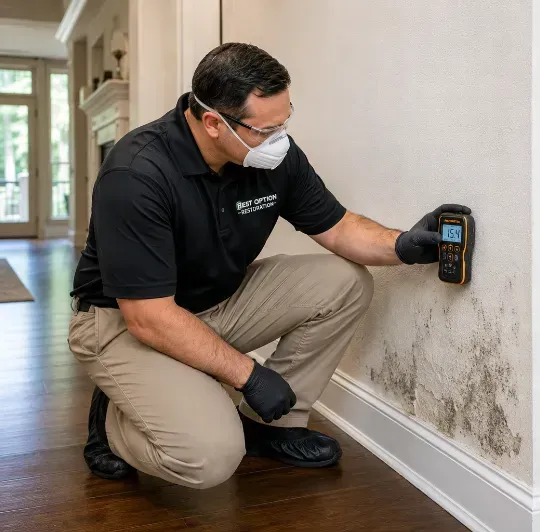
A moisture meter can help determine whether an area identified during the thermal scan actually has elevated moisture levels. Visual inspection can provide additional information about stains, damage, or possible mold growth.
This combination helps reduce the risk of confusing a normal temperature difference with a moisture problem.
If moisture is confirmed, the professional can investigate why it is present and whether the affected area needs further evaluation.
The exact tools used depend on the property and the conditions discovered during the inspection.
Can Thermal Imaging See Mold Behind Walls?
No. Thermal imaging cannot directly see mold through drywall, concrete, insulation, or other solid materials.
This is one of the most important things homeowners should understand about thermal imaging for mold detection.
A thermal camera detects infrared temperature patterns on a surface. It does not produce an X-ray image of the inside of a wall.
However, if hidden moisture is changing the temperature of the surface, thermal imaging may help a professional identify an area that deserves further investigation.
If additional inspection confirms moisture or other signs of a problem, the professional can determine whether further steps are appropriate.
For a deeper look at how professionals investigate concealed moisture and mold, learn more about hidden mold detection and the inspection tools used during the process.
When Is Thermal Imaging Useful for Mold Inspections?
Thermal imaging can be particularly useful when there are signs of possible hidden moisture but no obvious source can be found.
For example, a homeowner may notice a musty odor without seeing mold. A ceiling may have a water stain even though there is no active dripping. A wall may have recently been exposed to a plumbing leak but appear dry on the surface.
In these situations, thermal imaging may help identify temperature patterns that warrant closer inspection.
It can also be useful when investigating previous water damage or checking areas around plumbing, windows, roofs, and HVAC systems.
However, the technology should be viewed as an inspection aid rather than proof that mold exists.
Why Texas Homes Can Benefit From Thermal Imaging
Texas homes can face several moisture-related challenges throughout the year.
Heavy rainfall and storms can contribute to roof leaks and water intrusion. Plumbing problems can introduce moisture into walls and floors. Air-conditioning systems can also create condensation when equipment or drainage systems have problems.
High humidity can make moisture control more difficult as well.
Because some moisture problems are hidden, homeowners may not notice them until they develop into visible damage or mold growth.
Professional mold inspection services can use thermal imaging along with other inspection techniques to investigate suspicious areas and identify potential moisture concerns.
Thermal Imaging vs. Traditional Mold Inspection
Thermal imaging and traditional inspection methods serve different purposes.
A visual inspection allows a professional to identify visible mold, water stains, damaged materials, and other signs of a problem. Moisture meters can provide information about moisture levels in building materials.
Thermal imaging adds another layer by showing temperature patterns that may point to areas needing closer examination.
No single tool can identify every hidden mold problem. That is why professionals may combine visual inspection, moisture measurements, thermal imaging, and information about the property's history when investigating possible mold or water damage.
Should You Hire Mold Thermal Imaging Services?
If you suspect hidden moisture but cannot identify where the problem is located, mold thermal imaging services may be worth considering as part of a professional inspection.
This can be especially useful after water damage, plumbing leaks, roof leaks, or other events that may have introduced moisture into hidden areas.
A professional can explain whether thermal imaging is appropriate for your situation and what additional inspection may be needed.
Homeowners should also be cautious about companies that claim a thermal camera can prove that mold is present behind a wall. Thermal imaging provides temperature information, not direct confirmation of mold.
A reliable inspection should explain what the technology can and cannot determine.
What Happens After Thermal Imaging Finds a Problem?
If thermal imaging identifies an unusual area, the next step is usually additional investigation.
The professional may take moisture readings, inspect nearby materials, look for visible signs of water damage, or investigate the likely source of moisture.
If moisture is confirmed, the priority is to determine where the water is coming from and whether affected materials need to be dried, repaired, cleaned, or removed.
If mold is also suspected, the appropriate next step depends on the size and condition of the affected area.
The thermal scan is therefore one part of the investigation rather than the final answer. If further inspection confirms a mold problem, understanding the mold remediation process can help you know what to expect.
How Accurate Is Thermal Imaging for Mold Detection?
Thermal imaging can be a useful tool for identifying temperature differences that may be associated with moisture, but it cannot confirm mold by itself.
Its effectiveness can depend on building materials, indoor and outdoor temperatures, humidity, airflow, insulation, and other conditions.
An experienced professional understands these limitations and interprets thermal images together with other inspection findings.
This is why homeowners should look at thermal imaging as a way to find clues rather than as a method that directly detects mold.
Conclusion
Hidden moisture can remain unnoticed for weeks or months, creating conditions where mold can develop behind walls, ceilings, floors, and other concealed areas. Because these problems are often difficult to identify through visual inspection alone, thermal imaging for mold detection can provide valuable insight into unusual temperature patterns that may point to hidden moisture.
When combined with visual inspection, moisture measurements, and other appropriate inspection methods, thermal imaging can help professionals identify potential moisture problems without unnecessary damage to building materials. Professional mold inspection services can then help determine the cause and extent of the problem and identify the appropriate next steps.
If you suspect hidden moisture, musty odors, water stains, or possible mold growth in your Texas home or business, get in touch today through our Contact page to learn whether mold thermal imaging services may be appropriate for your property.
Frequently Asked Questions
1. Can Thermal Imaging Detect Mold Behind Walls?
Thermal imaging cannot directly see or identify mold behind walls. Instead, infrared cameras detect unusual temperature differences that may indicate hidden moisture. Since moisture can create conditions where mold grows, thermal imaging can help professionals identify areas that may need further inspection and moisture testing.
2. What Is Thermal Imaging for Mold Detection?
Thermal imaging for mold detection uses infrared camera technology to identify temperature differences on surfaces that may be associated with hidden moisture. It can help professionals investigate walls, ceilings, floors, and other areas without immediately opening or damaging building materials. Thermal imaging is typically combined with visual inspection and moisture measurements.
3. Is Thermal Imaging Enough to Confirm a Mold Problem?
No. Thermal imaging alone does not confirm the presence of mold. It helps identify unusual temperature patterns that may indicate moisture or another condition. Professionals may use visual inspection, moisture meters, and other appropriate inspection methods to determine whether a suspected area requires further investigation or remediation.
4. When Should I Use Mold Thermal Imaging Services?
Mold thermal imaging services may be useful when there are signs of hidden moisture, such as musty odors, unexplained water stains, recurring dampness, or previous water damage. They can also help investigate areas behind walls, ceilings, flooring, or other surfaces where moisture may not be visible.
5. Can Thermal Imaging Find Hidden Water Damage?
Thermal imaging can help identify temperature patterns that may indicate hidden moisture or water intrusion. However, an unusual thermal pattern does not automatically prove that water damage is present. Professionals typically use moisture measurements and visual inspection to confirm findings and determine the extent of the suspected problem.
Best Option Restoration