Have you recently discovered mold in your home after a leak or flood? Maybe you've noticed a musty smell that won't go away or find dark spots growing on your walls. If so, you may be wondering what happens after you call a restoration company.
Many homeowners feel uncertain about the remediation process because they don't know what to expect. Understanding how professional mold remediation services work can give you confidence that the problem is being handled safely and correctly. More importantly, it helps you see why simply cleaning visible mold isn't enough to stop it from coming back.
In this guide, we'll walk you through each stage of the mold remediation process, explain why every step matters, and show how professional remediation helps restore a healthier indoor environment.
Why Professional Mold Remediation Is Different
Many people assume mold can be removed with household cleaners or bleach. While these products may clean the surface temporarily, they usually don't reach the hidden mold growing behind drywall, under flooring, or inside insulation.
That's where professional mold remediation services make a difference. Instead of focusing only on visible mold, professionals identify the source of moisture, contain affected areas, remove contaminated materials safely, and restore the property to help prevent future mold growth.
This complete approach protects your home, improves indoor air quality, and reduces the risk of mold returning after cleanup.
Step 1: A Thorough Inspection
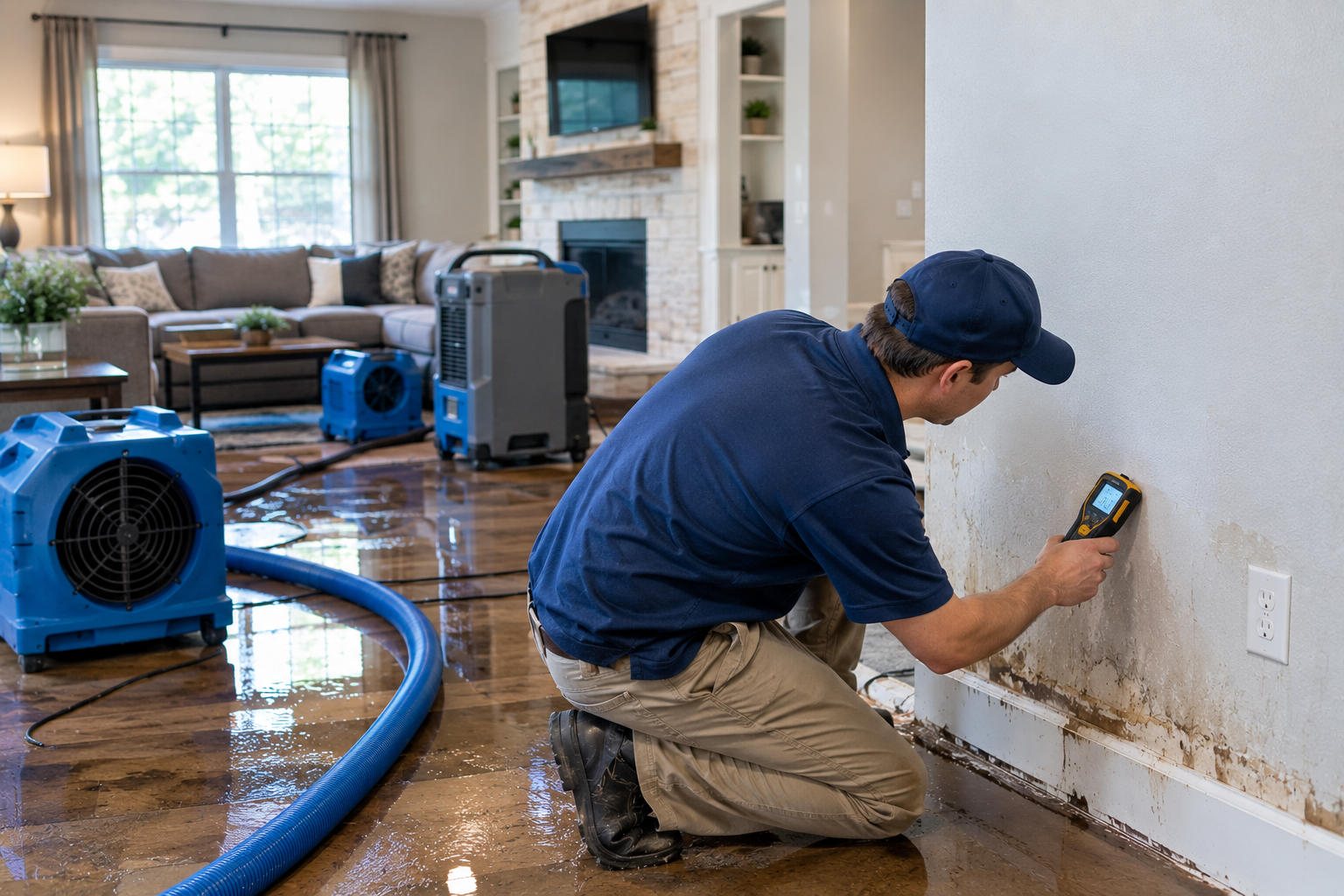
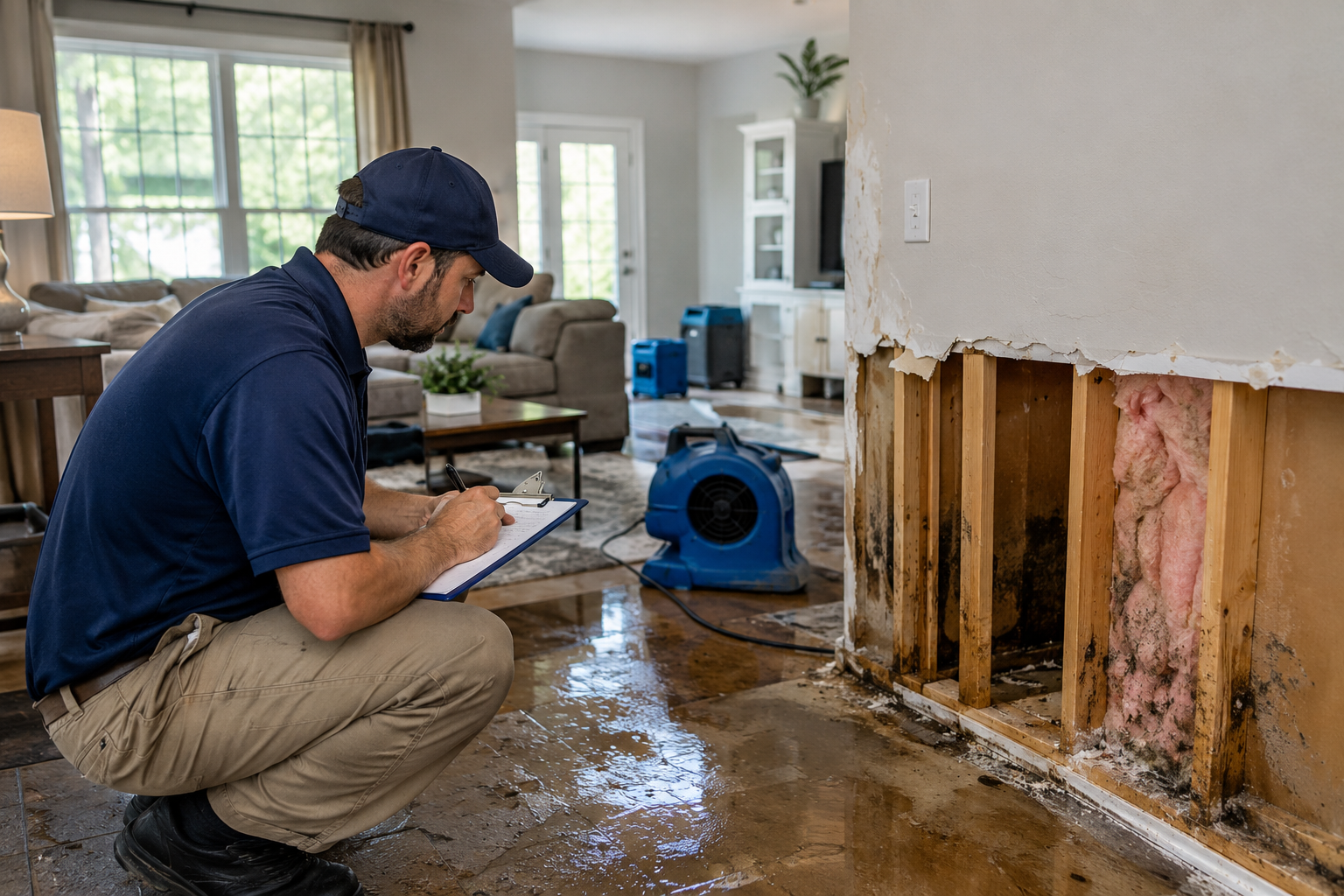
Every remediation project begins with a detailed inspection of the property. Before any cleanup starts, technicians assess the affected areas to determine how far the mold has spread and identify the conditions that allowed it to grow. This first step helps create a clear plan for the rest of the project.
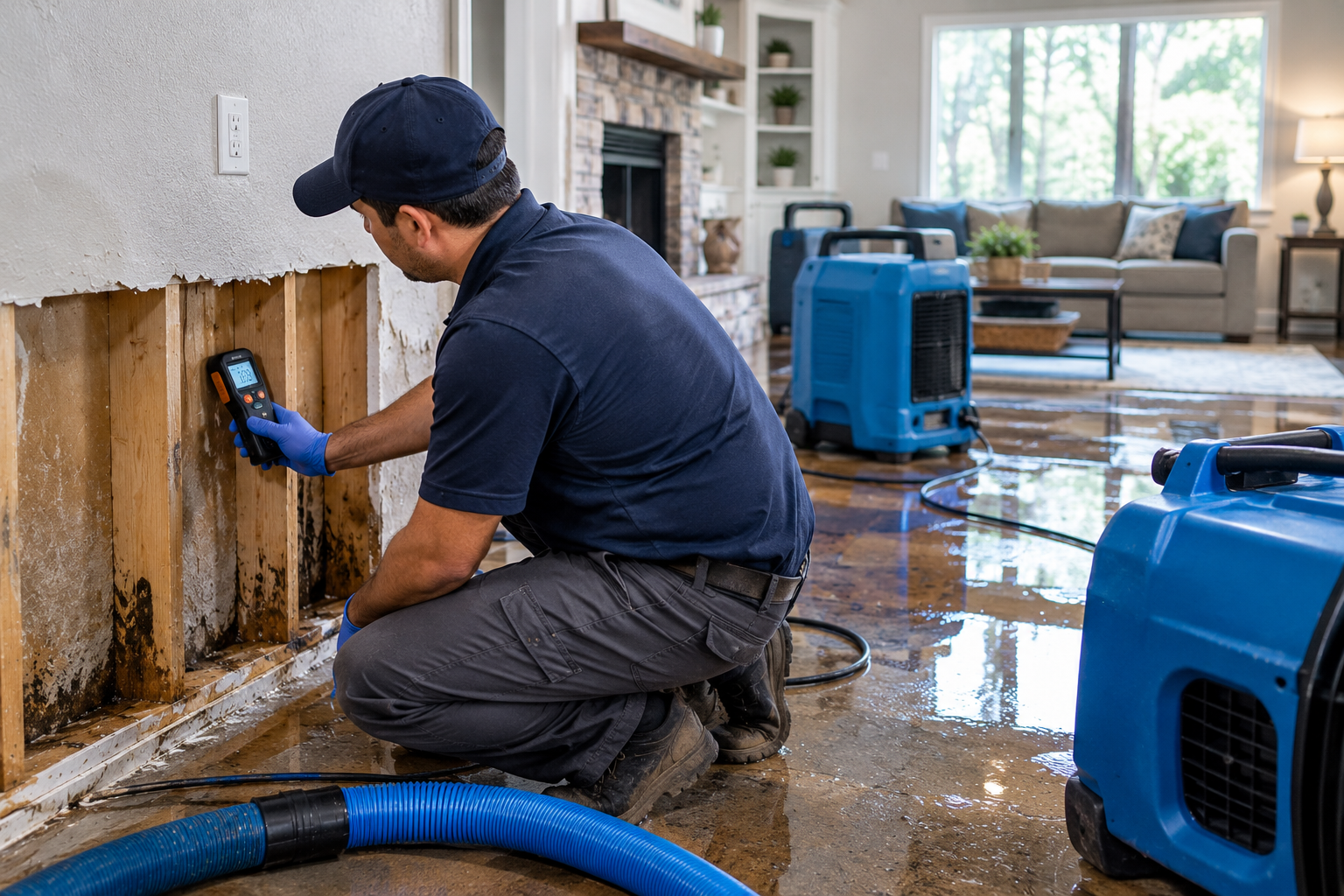
Since mold often grows in hidden areas, professionals use specialized equipment such as moisture meters, thermal imaging cameras, and humidity sensors to detect moisture behind walls, under flooring, and inside ceilings. These tools help locate mold that may not be visible during a standard inspection.
A thorough inspection also allows the remediation team to estimate the scope of work, recommend the most effective treatment methods, and explain the entire mold remediation process to the property owner. Starting with an accurate assessment helps ensure the remediation is completed safely and efficiently.
Step 2: Identifying and Stopping the Moisture Source
One of the most important steps in the mold remediation process is finding the source of moisture that allows mold to grow. Mold cannot survive without moisture, so removing the mold without fixing the underlying issue often leads to the problem returning.
Professionals carefully inspect the property to determine where water is entering or collecting. Common causes include leaking pipes, roof damage, appliance leaks, poor ventilation, flooding, or high indoor humidity. In some cases, moisture may be hidden behind walls or beneath flooring, making specialized equipment necessary to locate it.
Once the source is identified, repairs can be made before remediation continues. Correcting the moisture problem helps create an environment where mold is far less likely to return, making the entire remediation process more effective and long-lasting.
Step 3: Containing the Affected Area
Before mold removal begins, technicians isolate the affected area to prevent mold spores from spreading to other parts of the property. During cleanup, mold spores can easily become airborne, making proper containment an essential part of safe remediation.
To control contamination, professionals install temporary plastic barriers, seal openings, and use negative air pressure systems. HEPA air scrubbers also run throughout the project, capturing microscopic mold spores from the air and helping maintain better indoor air quality while work is in progress.
Containment protects unaffected rooms and reduces the chance of cross-contamination during cleanup. This careful approach allows professional mold remediation services to remove mold safely while minimizing disruption to the rest of the property.
Step 4: Safe Mold Removal
Once the affected area has been contained, technicians begin removing mold using methods that match the type and severity of contamination. The removal process depends on whether the mold has affected non-porous surfaces or porous building materials such as drywall, insulation, or carpeting.
In some situations, hard surfaces can be cleaned and restored. However, materials that have absorbed moisture and mold often need to be removed because the contamination extends deep inside them. Removing these materials safely helps stop mold from continuing to spread.
Throughout this stage of the mold remediation process, technicians follow industry-recognized procedures and use specialized protective equipment. Their goal is to remove mold safely while protecting both the property and everyone inside it.
Step 5: Cleaning and Sanitizing the Area
After contaminated materials have been removed, professionals clean the remaining surfaces to eliminate any mold spores that may still be present. Even though visible mold has been removed, microscopic spores can remain on nearby materials if the area is not cleaned thoroughly.
Using HEPA vacuums, specialized cleaning techniques, and antimicrobial treatments, technicians clean structural materials such as wood framing, concrete, and other non-porous surfaces. These methods help reduce contamination while improving indoor air quality throughout the property.
Cleaning is a critical part of professional mold remediation services because it prepares the space for restoration and reduces the chance of mold returning. A properly cleaned environment also provides homeowners with greater peace of mind once remediation has been completed.
Step 6: Drying the Property
Removing mold is only one part of the job. Any moisture left behind after remediation can create conditions for mold to grow again, which is why drying the property is such an important step.
Professionals use commercial-grade dehumidifiers and air movers to remove moisture from walls, flooring, framing, and other building materials. Throughout the drying process, moisture levels are monitored using specialized equipment to ensure the affected areas reach acceptable drying standards.
Completing this stage correctly helps prevent future mold growth and supports the success of the overall mold remediation process. Thorough drying also prepares the property for repairs and restoration work.
Step 7: Restoring the Home
After mold has been removed and the property has been completely dried, restoration work begins. The amount of restoration needed depends on how much material was damaged during the mold growth or removed during remediation.
Some projects require only minor repairs, such as replacing drywall or repainting walls. Larger remediation jobs may involve installing new insulation, flooring, trim, or ceiling materials. Every repair is completed with the goal of returning the property to a safe and functional condition.
Restoration is the final step in professional mold remediation services and allows homeowners to move forward knowing the mold problem has been properly addressed from start to finish.
How Long Does Professional Mold Remediation Take?
The length of a remediation project depends on several factors, including the size of the affected area, the amount of mold present, and the extent of the moisture damage. Every property is different, so timelines can vary from one project to another.
Small mold problems may be completed within one or two days, while larger remediation projects involving multiple rooms or significant water damage can take several days. Drying time and restoration work may also affect the overall schedule.
After completing the inspection, professionals can provide a more accurate estimate based on your property's specific needs. This helps homeowners understand what to expect throughout the remediation process.
Why Hiring Professionals Is Worth It
Choosing professional mold remediation services provides more than just mold removal. Experienced technicians understand how mold spreads, where it hides, and how to eliminate it safely without allowing contamination to spread throughout the property.
Professionals also use equipment that most homeowners do not have access to, including HEPA air scrubbers, moisture meters, thermal imaging cameras, and commercial drying equipment. These tools allow them to locate hidden moisture and complete remediation more effectively.
Hiring professionals also saves time and helps reduce the risk of recurring mold problems. By addressing both the mold and the moisture source, they provide a more reliable and long-lasting solution than temporary DIY cleaning methods.
When Should You Schedule Mold Remediation?
Some warning signs should never be ignored. You should consider scheduling professional mold remediation services if:
- Mold continues returning after cleaning.
- Your home has experienced flooding or water damage.
- A musty odor remains even after deep cleaning.
- Mold is spreading to multiple rooms.
- You notice worsening allergy symptoms indoors.
- You suspect hidden mold behind walls or beneath flooring.
Addressing mold early often prevents more extensive damage and makes the remediation process more manageable.
Conclusion
Knowing what happens during professional mold remediation services can make the process feel much less overwhelming. From the initial inspection to the final restoration, every step is designed to remove mold safely, correct moisture problems, and help prevent future growth.
Rather than simply cleaning visible mold, professionals focus on solving the underlying issue so your property can be restored properly. If you suspect mold in your home or business, taking action early can protect both your property and your indoor air quality.
If you've noticed signs of mold or recent water damage, you can connect through our contact page to schedule a professional inspection and learn how our mold remediation experts can help restore your property safely.
Frequently Asked Questions
1. What happens during professional mold remediation services?
Professional mold remediation services begin with a detailed inspection to identify mold growth and the source of moisture. The mold remediation process then includes containment, safe mold removal, cleaning, drying, and restoring affected areas to help prevent future mold growth.
2. How long do professional mold remediation services take?
The timeline depends on the size of the affected area and the extent of mold damage. Smaller projects may take one or two days, while larger jobs involving water damage or multiple rooms can take several days. A professional inspection provides the most accurate estimate.
3. Why should I hire professional mold remediation services instead of removing mold myself?
DIY cleaning may remove visible mold, but it often doesn't address hidden mold or the moisture source. Professional mold remediation services follow a complete mold remediation process using specialized equipment and containment methods to safely remove mold and reduce the risk of it returning.
4. What are the signs that I need professional mold remediation services?
You should consider professional mold remediation services if you notice recurring mold, persistent musty odors, recent water damage, visible mold spreading, or allergy symptoms that worsen indoors. Early remediation can help prevent additional property damage and improve indoor air quality.
5. Can mold return after professional mold remediation services?
Yes, mold can return if the underlying moisture problem is not corrected. A proper mold remediation process includes identifying and repairing the source of moisture, thoroughly drying the affected area, and cleaning contaminated surfaces to help prevent future mold growth.
Best Option Restoration