Water damage can happen suddenly from a burst pipe, plumbing leak, appliance failure, storm, or other water-related problem. For North Houston homeowners, dealing with the damage is only part of the challenge. You may also need to understand your insurance policy, document the loss, and arrange repairs.
If you are preparing an insurance claim for water damage Texas homeowners commonly face, acting quickly can help protect your property and give you better documentation for the claims process. The first priority is to stop additional damage when it is safe to do so. After that, document the affected areas, notify your insurer, and arrange a professional assessment.
This step-by-step guide explains how to approach a water damage insurance claim and what North Houston homeowners should know about mitigation, documentation, and restoration.
1. Stop Further Damage
Your first priority should be safety and preventing additional damage. If you can safely identify the source of the water, shut off the main water supply or the appropriate fixture valve.
If water has reached electrical outlets, appliances, or electrical equipment, do not handle electrical components while standing in water. Contact the appropriate professional if electrical systems may have been affected.
Once the immediate source has been controlled, take reasonable steps to protect the property. This may include moving undamaged belongings away from the affected area or placing protective materials over vulnerable items when appropriate.
Do not take risks to save property. If the situation involves significant flooding, sewage, structural concerns, or other hazards, professional assistance may be necessary.
2. Document Everything
Before cleaning up or throwing away damaged items, document the condition of the property when it is safe to do so.
Take clear photos and videos of wet flooring, damaged drywall, ceilings, cabinets, furniture, appliances, and other affected areas. Capture both close-up images and wider views that show where the damage occurred.
Make notes about when the water damage happened, what caused it, when the water source was stopped, and which areas were affected.
Good water damage insurance documentation can help you keep an organized record of the loss. Keep your photos, videos, notes, estimates, invoices, and other relevant documents together.
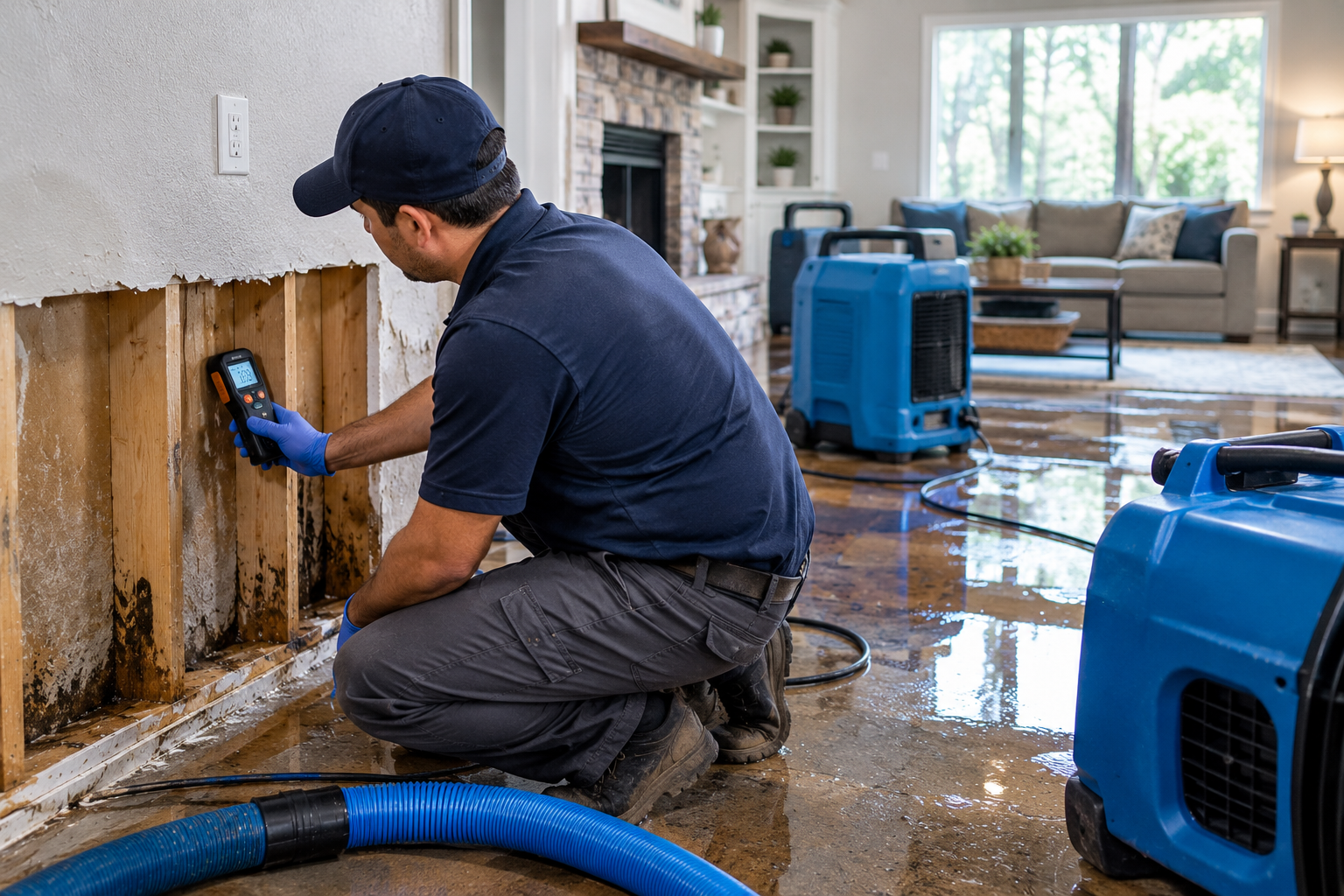
Do not make the mistake of assuming that visible damage is the only damage. Water can move behind walls, underneath flooring, and into other building materials.
3. Contact Your Insurer
After taking reasonable steps to protect the property, notify your insurance company according to your policy requirements.
Your insurer can explain how to file the claim and what documentation may be needed. Ask about the claims process, inspections, emergency mitigation, receipts, and any requirements you need to follow.
Insurance coverage depends on the specific policy and the cause of the water damage. A water loss caused by a sudden plumbing failure may be treated differently from flooding or long-term maintenance issues.
Do not assume that every water-related loss will be covered. Review your policy and discuss the specific circumstances with your insurance provider.
4. Get a Professional Assessment
Water can cause hidden damage even when the affected area looks relatively small. A professional assessment can help identify how far the moisture has spread and what materials may need attention.
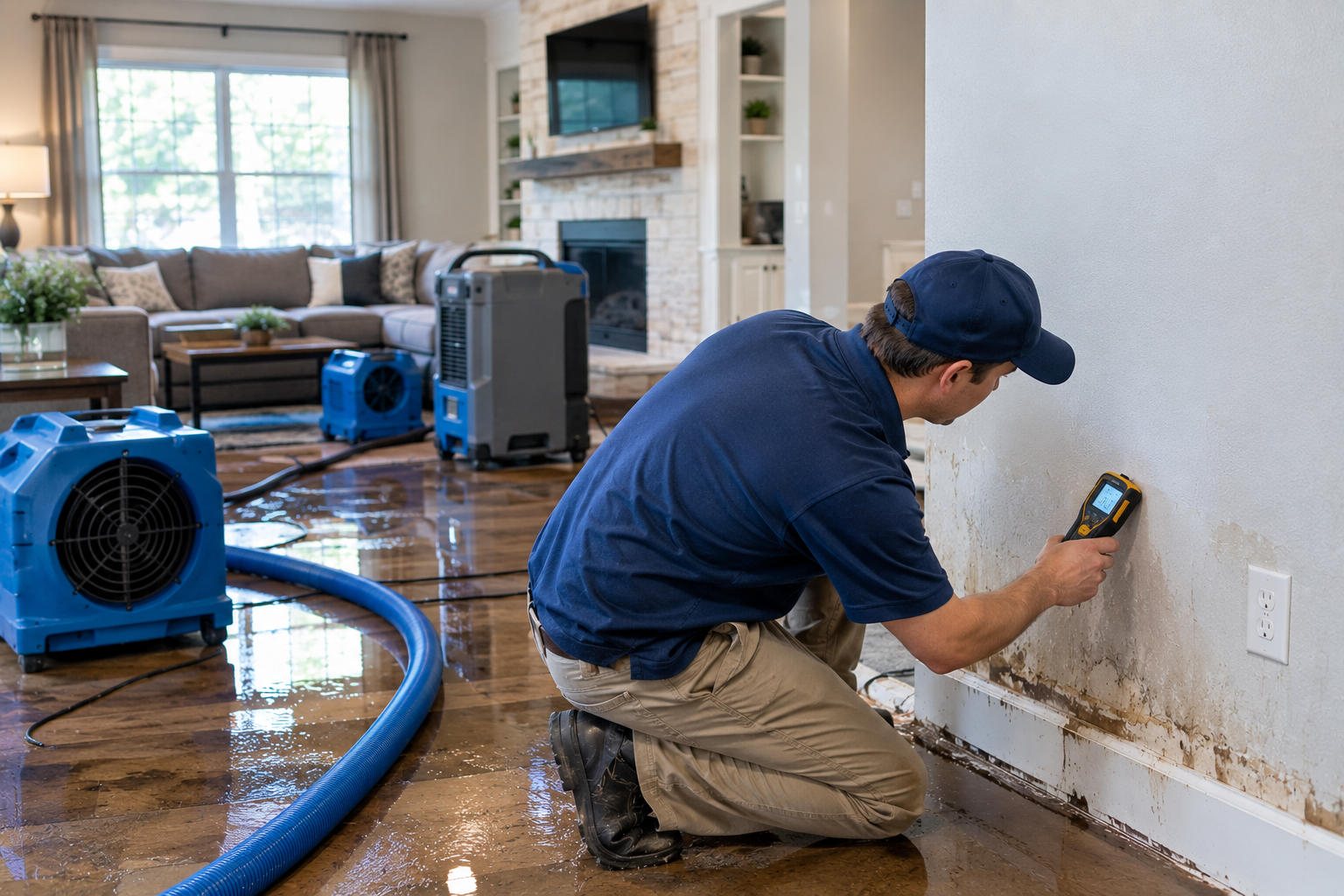
Professionals may use moisture meters and other equipment to check walls, flooring, ceilings, and other building materials.
The assessment can help determine whether the property needs water extraction, drying, cleaning, material removal, or additional repairs.
For North Houston homeowners, arranging water damage restoration promptly can be especially important after plumbing failures, storms, or other events that leave building materials wet.
If you need emergency assistance, emergency water restoration can help address active or recent water damage before the problem becomes more extensive.
5. Begin Water Mitigation
Water mitigation focuses on reducing additional damage after a water loss. The goal is to remove standing water, control moisture, and begin drying affected areas.
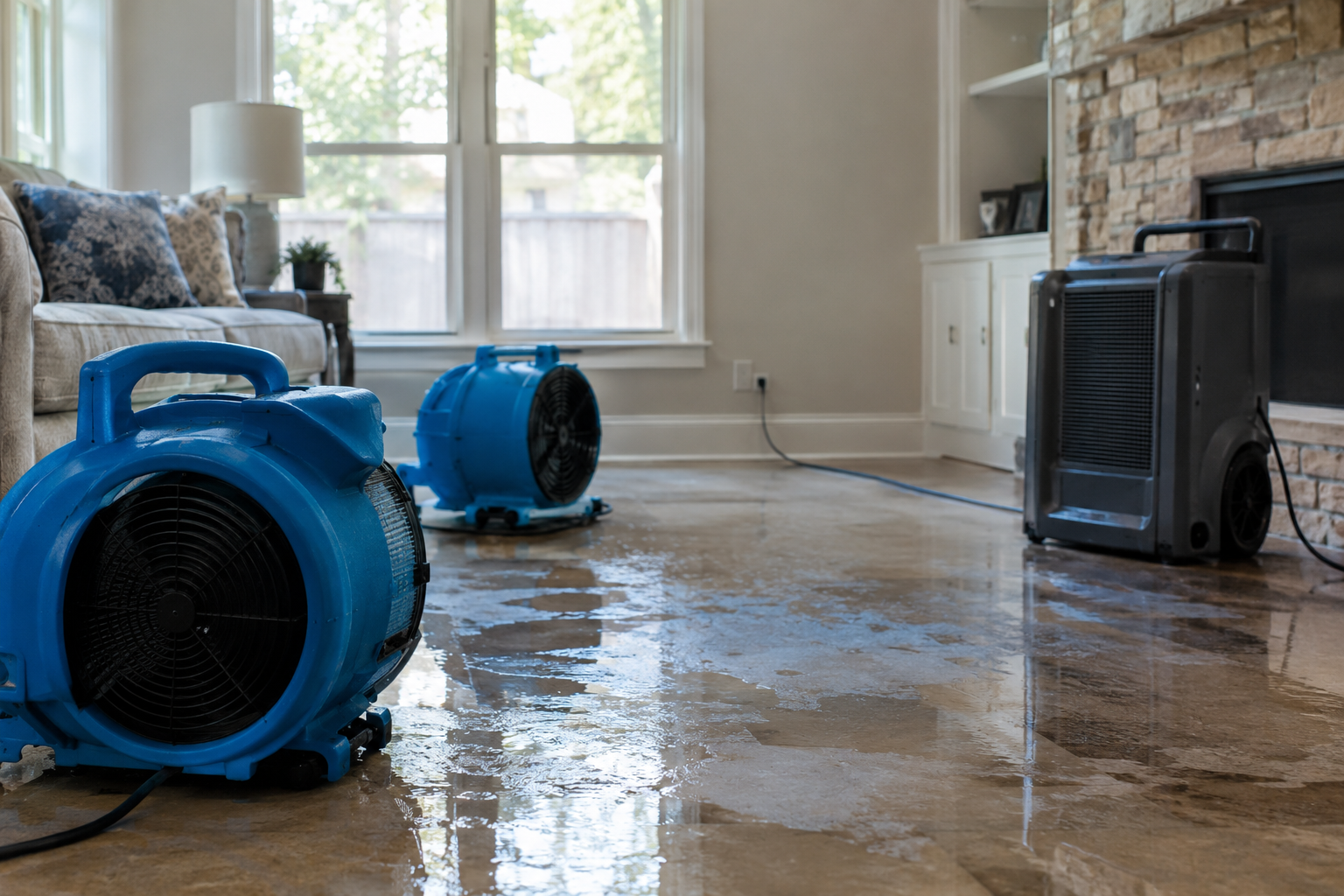
Depending on the situation, professionals may use water extraction equipment, air movers, dehumidifiers, and moisture monitoring tools.
Some materials may need to be removed if they cannot be properly dried or restored. The appropriate approach depends on the type of material, how long it has been wet, the source of the water, and the extent of the damage.
Professional water mitigation services can help address these issues quickly while keeping a record of the work performed.
Mitigation is not necessarily the same as full restoration. Mitigation focuses on limiting additional damage, while restoration can include repairing and rebuilding affected areas.
6. Keep Records and Receipts
Keep detailed records throughout the claim and restoration process. Save receipts for emergency services, temporary repairs, damaged item replacement, temporary accommodation, and other expenses that may relate to the loss.
Also keep copies of estimates, invoices, inspection reports, insurance correspondence, and photographs.
Write down important conversations with your insurer and restoration professionals, including dates and the main information discussed.
Organized records can make it easier to understand what has been done and what expenses have occurred.
If you are unsure whether a particular expense may be covered, ask your insurance company before assuming it will be reimbursed.
7. Complete Structural Drying
Drying is one of the most important parts of addressing water damage. Water can remain inside drywall, flooring, framing, insulation, and other materials even after visible standing water has been removed.
Structural drying uses professional equipment and moisture monitoring to help reduce moisture in affected building materials.
The drying process can vary depending on the amount of water, materials involved, temperature, humidity, airflow, and how long the property was exposed to moisture.
Simply placing a household fan in a wet room may not be enough when moisture has moved into walls, flooring, or other concealed areas.
Professionals can monitor moisture levels and determine when affected materials have reached appropriate drying conditions.
8. Move From Mitigation to Restoration
Once the property has been stabilized and affected materials have been properly dried or removed, restoration work can begin.
Restoration may include replacing damaged drywall, repairing flooring, restoring cabinets, repainting surfaces, replacing insulation, or addressing other parts of the property.
The exact work depends on the cause and extent of the water damage. It is important to address the source of the water before completing permanent repairs. Otherwise, the same problem could damage newly restored materials.
A professional restoration provider can help identify which areas require repair and coordinate the work based on the condition of the property.
9. Avoid Common Insurance Claim Mistakes
A water damage claim can become more difficult when important steps are skipped. One common mistake is waiting too long to report the loss or begin appropriate mitigation.
Another is failing to document the damage before cleaning up. Photos and videos can provide useful evidence of the property's condition.
Homeowners should also avoid making major permanent repairs before understanding their insurer's requirements. Emergency measures to prevent further damage may be necessary, but documentation and communication are still important.
Other mistakes include:
- Throwing away damaged belongings before documenting them
- Failing to keep receipts and restoration records
- Assuming all water damage is automatically covered
- Ignoring moisture hidden behind walls or under flooring
- Waiting too long to address wet building materials
Following the claims process carefully can help you maintain better records and reduce confusion during restoration.
Does Homeowners Insurance Cover Water Damage in Texas?
Whether homeowners insurance covers water damage depends on the cause of the loss and the terms of the specific policy.
Sudden and accidental water damage may be covered in some circumstances, while damage caused by flooding, long-term leaks, neglect, or maintenance issues may be excluded or handled differently.
This is why homeowners should review their policy and speak directly with their insurance provider about their specific situation.
For an insurance claim for water damage Texas homeowners are dealing with, documentation of the cause, timing, affected areas, and mitigation work can be important during the claims process.
Do not rely on general assumptions about coverage. Your insurance company can explain how your individual policy applies to the loss.
Why Fast Action Matters in North Houston
Water damage can become more extensive when wet materials remain untreated. Moisture can spread through flooring, drywall, ceilings, cabinets, and other parts of a property.
North Houston homeowners may also deal with storm-related water intrusion, plumbing problems, roof leaks, and other sources of water damage throughout the year.
Acting quickly gives you an opportunity to identify the source, remove standing water, begin drying, and document the condition of the property.
Professional restoration services can also help identify moisture that may not be visible during a basic inspection.
Final Thoughts
A water damage insurance claim involves more than calling your insurance company. Homeowners should focus on safety, stop additional damage when possible, document the property, notify the insurer, and arrange a professional assessment.
The restoration process may include water extraction, water mitigation services, structural drying, cleaning, material removal, and repairs. Keeping organized water damage insurance documentation throughout the process can also make it easier to track the claim.
If your North Houston property has experienced water damage, contact Best Option Restoration to discuss the situation and learn what restoration steps may be appropriate for your property.
Frequently Asked Questions
Does homeowners insurance cover water damage in Texas?
Homeowners insurance may cover certain types of sudden and accidental water damage, depending on the cause of the loss and the policy. Flooding, long-term leaks, and maintenance-related damage may be excluded or handled differently. Review your policy and speak with your insurance provider about your specific situation.
What should I do first for a water damage insurance claim?
First, make sure everyone is safe and stop the water source if you can do so safely. Then document the damage with photos and videos, notify your insurance company, and arrange a professional assessment. Taking these steps can help limit additional damage and keep useful records for your claim.
What documentation is needed for a water damage insurance claim?
Useful documentation can include photos and videos of the damage, a description of what happened, receipts, repair estimates, restoration invoices, inspection reports, and records of communication with your insurer. Keep copies of all relevant documents throughout the claim and restoration process.
Should I start water mitigation before my insurance claim is approved?
If immediate action is needed to prevent additional property damage, reasonable mitigation may be necessary. Contact your insurance company as soon as possible and document the property's condition before and during the work. Your insurer can explain its requirements for emergency mitigation and documentation.
What is included in water damage restoration?
Water damage restoration can include water extraction, moisture assessment, structural drying, cleaning, removal of unsalvageable materials, and repairs. The exact work depends on the source, severity, affected materials, and condition of the property.
Best Option Restoration