Has your home recently experienced a flood, leaking pipe, or roof damage? Even after the water is cleaned up, you may still face another problem that isn't always visible, mold. Many homeowners assume the danger is over once the area looks dry, but moisture trapped inside walls, flooring, or insulation can quickly lead to mold growth.
That's why understanding mold removal after water damage is so important. Mold can begin growing within 24 to 48 hours after water exposure, especially in warm and humid environments. Acting quickly not only protects your property but also helps prevent costly repairs and indoor air quality issues.
In this guide, we'll explain why mold develops after water damage, what the removal process involves, and when it's time to call mold remediation services for professional help.
Why Does Mold Grow After Water Damage?
Water damage creates the perfect conditions for mold to develop. When moisture remains trapped inside building materials like drywall, wood, carpet, or insulation, mold spores already present in the air begin to grow.
Even if surfaces appear dry, hidden moisture may still exist behind walls or beneath flooring. This is why mold often develops days after a flood, plumbing leak, or storm damage. Warm temperatures and poor ventilation can make the problem worse by allowing mold to spread more quickly.
The sooner excess moisture is removed, the lower the risk of mold growth. Taking fast action after water damage is one of the best ways to protect your home from long-term issues.
Why Mold Removal After Water Damage Is Important
Ignoring mold after water damage can lead to much bigger problems over time. What begins as a small amount of hidden moisture can eventually affect multiple rooms, damage building materials, and reduce indoor air quality.
Mold doesn't simply disappear on its own. As it grows, it can weaken drywall, stain surfaces, produce unpleasant odors, and spread microscopic spores throughout the property. The longer the problem is left untreated, the more difficult and expensive it may become to fix.
Proper mold removal after water damage addresses both the mold itself and the moisture conditions that allowed it to grow. This helps reduce the chance of recurring mold problems and protects the long-term condition of your property.
Step 1: Inspecting the Affected Area
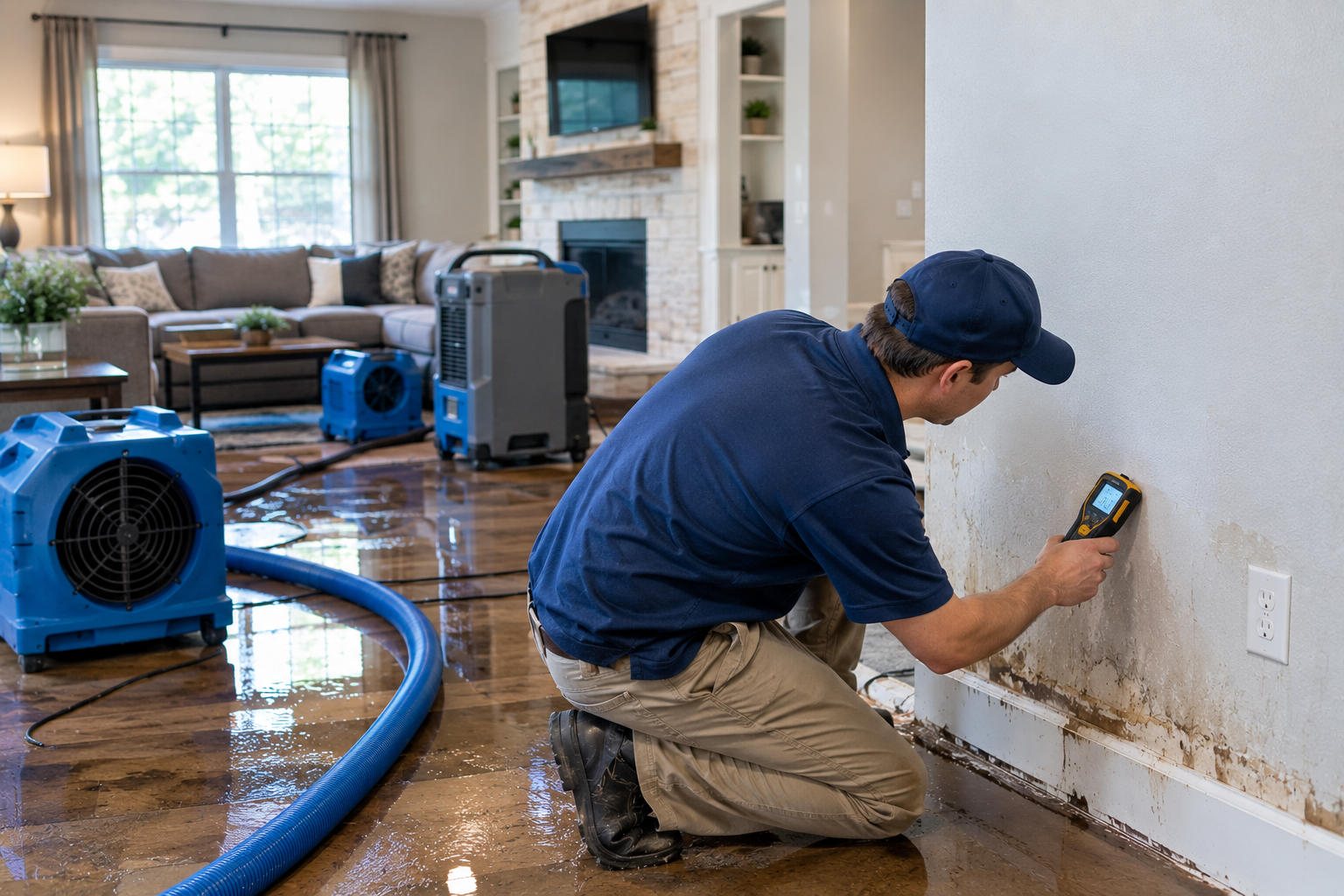
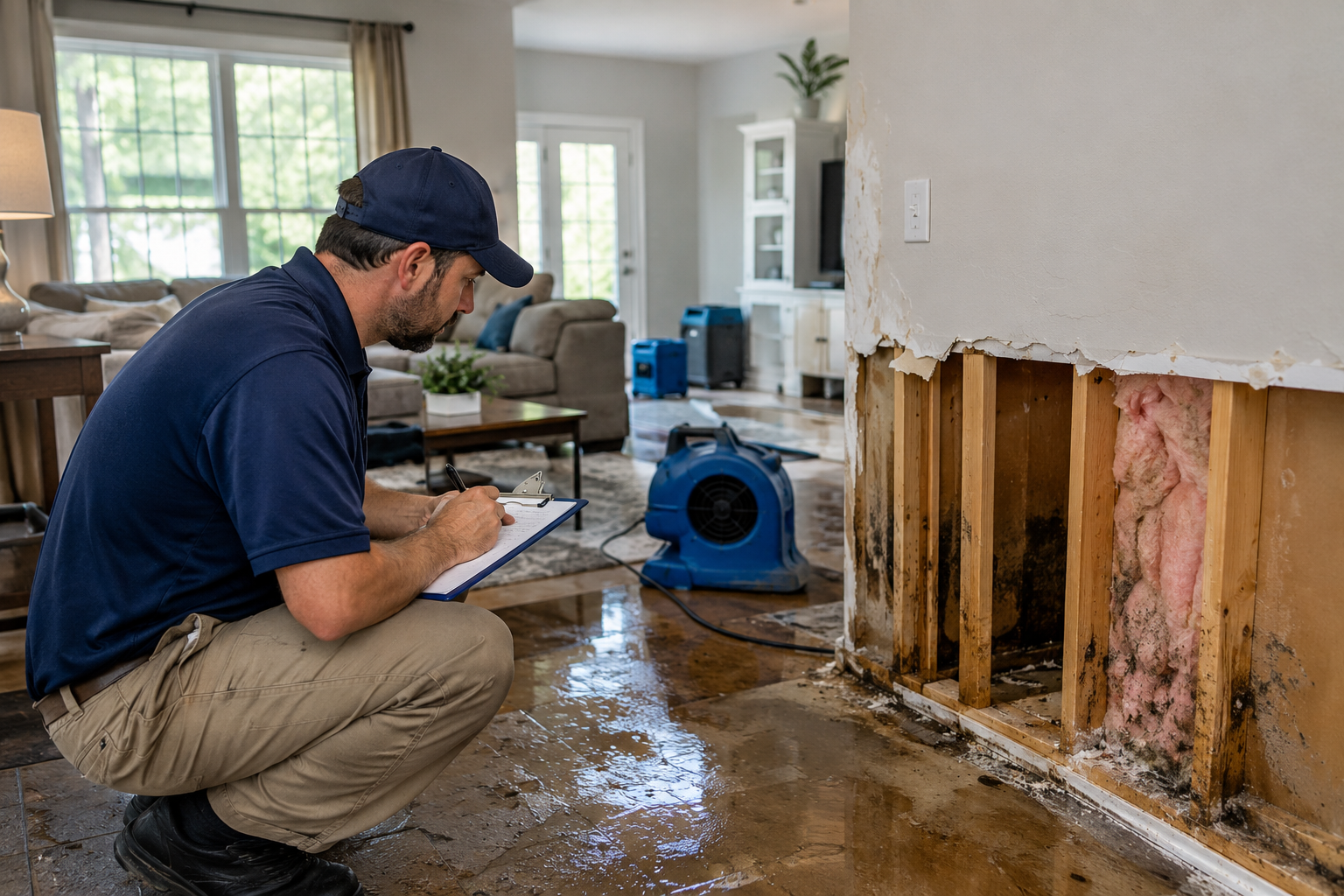
The first step is determining how much of the property has been affected. Professionals carefully inspect areas exposed to water and look for signs of hidden moisture that may not be immediately visible.
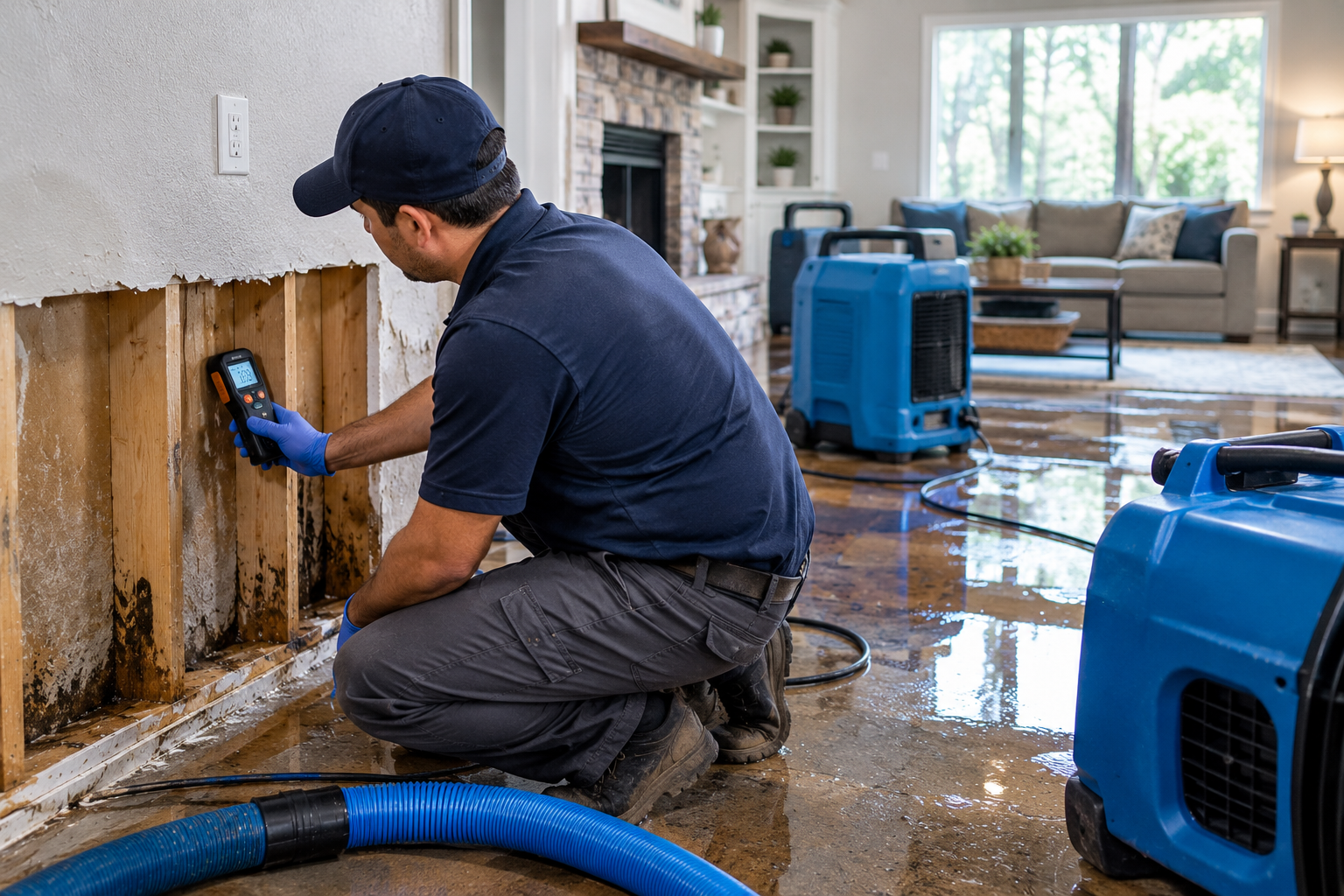
Specialized tools such as moisture meters and thermal imaging cameras help locate damp areas behind walls, beneath flooring, and inside ceilings. This detailed inspection allows technicians to identify where mold is likely to develop and create the right restoration plan.
A thorough inspection ensures no affected areas are overlooked before cleanup begins.
Step 2: Removing the Source of Moisture
Before mold can be removed successfully, the source of water must be identified and repaired. Whether the damage was caused by a leaking pipe, roof leak, flooding, or appliance failure, solving the moisture problem is essential.
If moisture remains inside the property, mold can continue growing even after visible mold has been cleaned away. Professionals make sure the water source has been stopped before moving forward with remediation.
Correcting the moisture issue is one of the most important parts of preventing mold from returning.
Step 3: Drying the Property Completely
After the water source has been repaired, the affected area must be dried as quickly as possible. Industrial air movers and commercial dehumidifiers are used to remove moisture trapped inside building materials.
Professionals monitor moisture levels throughout the drying process to ensure walls, flooring, and structural materials reach safe moisture levels. This step reduces the likelihood of mold growth and prepares the property for any necessary cleanup or repairs.
Proper drying is one of the most effective ways to limit damage after a water intrusion.
Step 4: Removing Mold Safely
If mold has already developed, the contaminated areas must be cleaned or removed using proper remediation techniques. Depending on the severity of the damage, some materials can be cleaned while others may need to be replaced.
Professionals use containment barriers, HEPA filtration, and specialized cleaning methods to prevent mold spores from spreading to unaffected areas of the property. This controlled approach helps reduce cross-contamination while improving indoor air quality.
Safe mold removal after water damage requires more than simply wiping away visible mold. Hidden contamination must also be addressed.
Step 5: Cleaning and Restoring the Property
Once mold has been removed, the remaining surfaces are cleaned thoroughly using professional equipment and antimicrobial treatments. This helps remove any remaining mold spores and prepares the area for restoration.
Depending on the extent of the damage, restoration may include replacing drywall, insulation, flooring, or other building materials affected by water or mold. The goal is to restore the property while reducing the chance of future mold problems.
Professional restoration also ensures the repaired areas blend naturally with the rest of the home.
Why Professional Mold Remediation Services Matter
While some homeowners attempt to clean mold themselves, larger water damage situations often require expert attention. Hidden mold can continue growing behind walls or under flooring even when surfaces appear clean.
Mold remediation services use specialized equipment to detect moisture, contain affected areas, remove mold safely, and restore damaged materials. Professionals also understand how mold spreads and follow industry-approved procedures that help protect both the property and its occupants.
Hiring experienced technicians can save time, reduce repair costs, and provide confidence that the problem has been addressed correctly.
Signs You Should Schedule Mold Removal After Water Damage
Not every water damage event leads to visible mold immediately. However, certain warning signs should never be ignored because they often indicate hidden moisture or mold growth.
You should consider scheduling professional help if:
- A musty odor develops after water damage.
- Visible mold appears on walls, ceilings, or flooring.
- Water damage was not dried within 24 to 48 hours.
- Paint begins peeling or drywall feels soft.
- Allergy symptoms become worse indoors.
- Mold continues returning after cleaning.
Addressing these signs early often prevents more extensive repairs later.
How to Prevent Mold After Water Damage
Preventing mold starts with responding quickly after any water intrusion. Drying affected materials within the first 24 to 48 hours significantly reduces the risk of mold growth.
Regularly inspect your property for plumbing leaks, roof damage, or signs of excess humidity. Keeping indoor humidity under control and improving ventilation in moisture-prone areas also helps create an environment where mold is less likely to develop.
Routine maintenance and early repairs are often the best defense against future mold problems.
Conclusion
Mold removal after water damage is about much more than cleaning visible mold. It requires identifying hidden moisture, drying affected materials, removing contamination safely, and restoring damaged areas before mold has the opportunity to spread further.
Delaying cleanup can increase repair costs and allow mold to affect more of your property. Working with experienced mold remediation services helps ensure the problem is handled correctly from start to finish.
If you've noticed signs of mold or recent water damage, you can connect through our contact page to schedule a professional inspection and learn how our mold remediation experts can help restore your property safely.
Frequently Asked Questions
1. How soon should mold removal begin after water damage?
Mold removal after water damage should begin as soon as possible because mold can start growing within 24 to 48 hours when moisture remains inside building materials. A prompt inspection and professional drying help reduce the risk of mold spreading and causing further property damage.
2. Does every water damage incident require mold remediation services?
Not every water damage event leads to mold growth, but if moisture isn't removed quickly or mold is already visible, mold remediation services are recommended. A professional inspection can determine whether hidden moisture or mold is present and whether remediation is necessary.
3. What is the difference between water damage restoration and mold removal after water damage?
Water damage restoration focuses on extracting water, drying the property, and repairing damage. Mold removal after water damage addresses mold that develops because of trapped moisture. If mold has already formed, remediation is often needed alongside water damage restoration.
4. Can mold grow even if my home looks completely dry?
Yes. Water can remain trapped behind walls, under flooring, inside insulation, or in other hidden areas even when surfaces appear dry. This hidden moisture can lead to mold growth, which is why professional moisture inspections are important after significant water damage.
5. Why should I hire mold remediation services after water damage?
Mold remediation services use specialized equipment to locate hidden moisture, safely remove mold, improve indoor air quality, and help prevent mold from returning. Professional remediation addresses both the mold and the moisture source, providing a more complete and long-lasting solution than surface cleaning alone.
Best Option Restoration