Have you ever noticed a musty smell in your home but could not find where the mold was coming from? Or perhaps a wall looks normal even though it was recently exposed to a leak. These situations can make mold difficult to locate.
Mold often grows in damp areas that are hidden from view. It can develop behind drywall, under flooring, around windows, inside ceilings, or near plumbing. This is where professional mold detection tools can help.
Professionals use different tools to look for moisture and signs of possible mold growth. These tools do not all detect mold directly. Instead, they help identify conditions where mold may be growing and guide the inspection process.
Understanding these tools can help homeowners know what to expect from professional mold inspection services. If hidden moisture is suspected, professionals may use several inspection methods to locate affected areas before determining whether mold remediation is necessary.
Why Is Mold Sometimes Difficult to Detect?
Visible mold is usually easier to identify, but not every mold problem can be seen.
A small plumbing leak can leave moisture inside a wall. A roof leak may affect the ceiling while the surface looks normal. High humidity can also create damp conditions in areas where mold may eventually develop.
Mold can remain hidden until the growth becomes large enough to produce a visible stain or noticeable odor. Hidden mold behind walls, ceilings, and flooring can be difficult to locate without the right inspection methods.
This is why professionals use different mold inspection methods rather than relying only on what they can see.
Step 1: Visual Inspection
A visual inspection is one of the first and most important mold inspection methods.
Professionals look for visible mold, water stains, peeling paint, bubbling drywall, discoloration, condensation, and other signs of moisture damage.
They may also inspect areas where moisture problems commonly occur, such as bathrooms, kitchens, attics, crawl spaces, basements, around windows, and near plumbing fixtures.
A visual inspection does not require complicated equipment, but it helps professionals understand where additional investigation may be necessary.
If there are signs of moisture but no visible mold, other tools can be used to investigate further.
Step 2: Moisture Meters
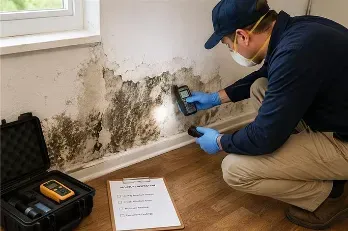
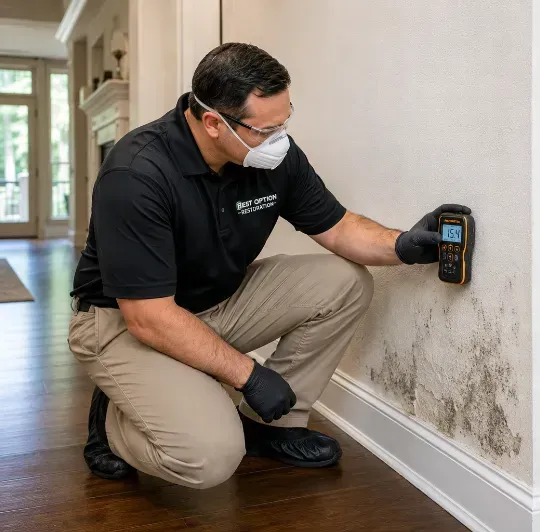
Moisture meters are among the most useful mold detection tools used during a property inspection.
These handheld devices measure the amount of moisture present in certain building materials. Depending on the type of meter, it may be used on materials such as drywall, wood, flooring, or other surfaces.
For example, a wall may look completely dry on the outside but still contain moisture underneath. A moisture meter can help identify areas that may require closer inspection.
Finding moisture does not automatically mean mold is present. Instead, it tells the professional that conditions may exist that support mold growth.
This information helps guide the inspection and can prevent hidden moisture problems from being overlooked.
Step 3: Thermal Imaging Cameras
Thermal imaging cameras are another useful tool for investigating possible moisture problems.
These cameras detect differences in surface temperature and display them as an image. Areas affected by moisture can sometimes appear different from surrounding dry materials because water can change the temperature characteristics of a surface.
Thermal imaging for mold detection can help professionals locate unusual temperature patterns that may point to hidden moisture.
For example, a thermal camera may reveal an unusual area on a wall or ceiling following a leak. The professional can then use a moisture meter or another inspection method to determine whether moisture is actually present.
Step 4: Borescope Cameras
Sometimes professionals need to look inside a wall or another difficult-to-access area.
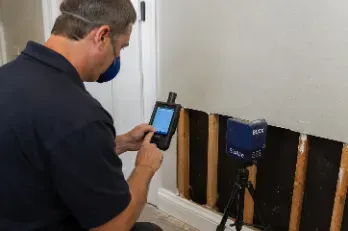
A borescope camera is a small camera attached to a flexible cable. It can be inserted through a small opening to view areas that cannot easily be seen from the outside.
This can be useful when hidden mold is suspected behind drywall or inside a wall cavity.
A borescope can provide visual information without requiring a large section of the wall to be opened.
However, it is generally used when there is a reason to suspect a hidden problem. Professionals consider the property's history, moisture readings, odors, and other evidence before deciding whether this type of inspection is appropriate.
Step 5: Hygrometers
Humidity can play an important role in mold growth, which is why professionals may also use hygrometers.
A hygrometer measures moisture in the air, or relative humidity. High indoor humidity can contribute to condensation and create conditions that support mold growth.
Checking humidity can be especially useful in bathrooms, kitchens, poorly ventilated rooms, and areas affected by water damage.
However, humidity readings alone cannot confirm that mold is present. They provide information about the environment and help professionals understand whether moisture control may be needed.
Step 6: Air Sampling When Appropriate
Air sampling may sometimes be included as part of a mold investigation, but it is important to understand what it can and cannot tell you.
Air samples can be collected and analyzed to identify certain types and concentrations of airborne mold particles. However, a single air sample does not necessarily provide a complete picture of a property's mold condition.
Professionals determine whether sampling is appropriate based on the circumstances of the inspection.
In many situations, visual observations and moisture information are more useful for identifying the source of a moisture-related problem.
This is why experienced mold inspection services generally consider multiple pieces of information instead of relying on one test.
Step 7: Moisture Mapping
Professionals may also use moisture readings to create a clearer picture of where water has affected a property.
For example, if a pipe leaked inside a wall, moisture may have traveled beyond the area where the leak first occurred. Taking readings at different points can help identify the boundaries of the affected area.
This process can help determine whether additional sections of a wall, ceiling, or floor need to be investigated.
Moisture mapping can also be useful after flooding or significant water damage because moisture may spread into areas that are not immediately visible.
What Can Mold Detection Tools Actually Tell You?
It is important to understand that most mold detection tools do not directly tell you, "There is mold here." Instead, they provide information that helps professionals investigate the property.
For example:
- A moisture meter can identify damp building materials.
- A thermal camera can highlight unusual temperature patterns.
- A borescope can provide a view inside hidden spaces.
- A hygrometer can measure indoor humidity.
- Air sampling can provide information about airborne mold particles when sampling is appropriate.
Professionals combine these findings with visual observations and the property's history to understand the situation.
When Should You Consider Mold Inspection Services?
Professional mold inspection services may be useful when you notice persistent musty odors, recurring mold, unexplained water stains, recent flooding, or signs of moisture behind walls or ceilings.
An inspection can also be helpful when you suspect a mold problem but cannot identify where it is coming from.
If your home has experienced a significant leak or water event, checking for hidden moisture can help identify areas that may need attention before a larger mold problem develops.
The appropriate inspection method depends on the property and the reason for the inspection.
Why Professional Mold Inspection Matters
Homeowners can purchase basic moisture meters and other tools, but using them correctly requires understanding what the readings mean.
For example, a high moisture reading does not automatically confirm mold. Similarly, a thermal image may show an unusual area without proving that mold is present.
Professionals look at the complete picture rather than relying on one reading. Experienced inspectors can determine where to take measurements, which areas need closer examination, and whether additional testing is appropriate.
Conclusion
Hidden moisture can create conditions for mold growth behind walls, ceilings, and floors. Mold detection tools such as moisture meters, thermal cameras, and borescopes can help identify areas that need further investigation.
When combined with visual inspection and other mold inspection methods, these tools help professionals understand the source and extent of moisture problems. If you suspect hidden moisture, musty odors, or mold growth, get in touch today through our Contact page to learn whether professional mold inspection services may be appropriate for your property.
Frequently Asked Questions
1. What tools do professionals use to detect hidden mold?
Professionals commonly use moisture meters, thermal imaging cameras, humidity meters, visual inspection techniques, and, when appropriate, air or surface sampling. These tools help identify moisture and areas that may require further investigation.
2. Can a moisture meter detect mold?
No. A moisture meter detects moisture levels in building materials; it does not directly identify mold. High moisture readings can show where conditions may support mold growth, allowing professionals to investigate those areas further.
3. Can thermal imaging detect mold behind walls?
Thermal imaging does not directly detect mold. It identifies temperature differences that may indicate hidden moisture. Professionals can then use moisture meters and other inspection methods to determine whether mold may be present.
4. When should I hire mold inspection services?
Consider mold inspection services after water damage, recurring leaks, persistent musty odors, unexplained moisture, or suspected hidden mold. An inspection can help identify moisture problems before they become more extensive.
5. Are mold detection tools enough to confirm a mold problem?
No.
Mold detection tools provide useful information, but they do not automatically confirm mold. Professionals combine tool readings with visual inspection, moisture-source investigation, and additional testing when appropriate.
Best Option Restoration