Have you found mold in your Texas home and wondered what happens next? Maybe you noticed dark spots around a window, a musty smell after a plumbing leak, or mold growing in a damp room. Knowing what happens during the mold remediation process can make the situation feel much less stressful.
Mold remediation is more than simply wiping away visible mold. The moisture source needs to be identified, affected areas need to be contained, and contaminated materials may need to be cleaned or removed. In Texas, certain mold-related work is also regulated by the Texas Department of Licensing and Regulation (TDLR).
For homeowners considering mold remediation services, understanding each stage can help you make informed decisions and choose the right professional for the job. Here's a simple step-by-step look at how the process generally works.
What Is Mold Remediation?
Mold remediation is the process of removing, cleaning, sanitizing, or treating mold and mold-contaminated materials. The goal is not simply to make mold disappear from view. A proper remediation project also addresses the moisture conditions that allowed the mold to grow.
According to TDLR, mold assessment and mold remediation are regulated activities in Texas, although specific exemptions apply depending on the property and size of the affected area.
This is important because a professional mold remediation contractor should understand both the practical side of mold removal and the requirements that apply to the project.
Step 1: Inspect the Property
The first step in the mold remediation process is understanding where the mold is and why it developed.
A professional begins by examining areas where mold or moisture is visible. They may also look at ceilings, walls, flooring, plumbing areas, crawl spaces, attics, and other locations where water may have entered the property.
Moisture meters and other tools can help identify damp materials that may not look wet on the surface. Finding the moisture source is especially important because removing mold without fixing the underlying moisture problem can allow it to return.
If a formal mold assessment is needed, Texas requires the appropriate licensed mold assessment professional for regulated assessment activities. TDLR also notes that mold assessment and remediation are separate licensed activities, with restrictions on performing both roles on the same project in most circumstances.
Step 2: Determine the Extent of the Mold Problem
Once the property has been inspected, the next step is determining how extensive the contamination is.
Visible mold may only represent part of the problem. Moisture can travel behind drywall, beneath flooring, or into insulation, allowing mold to grow in areas that homeowners cannot see.
The professional will consider the affected materials, the size of the contaminated area, the source of moisture, and whether the mold has spread to other parts of the building.
This information helps determine what type of remediation work is necessary and what precautions should be taken during cleanup.
Step 3: Create a Remediation Plan
A proper remediation project should have a clear plan before the work begins. The plan explains what areas will be addressed, which materials need cleaning or removal, what containment will be used, and how the work will be completed.
For regulated projects, a licensed mold remediation contractor develops a customized work plan based on the applicable remediation protocol. TDLR states that the work plan should provide detailed instructions for the project and be supplied to the client before preparation work begins.
This planning stage gives homeowners a better understanding of what the project involves instead of leaving them guessing about what happens once the workers arrive.
Step 4: Set Up Containment
Before moldy materials are disturbed, the affected area may need to be contained.
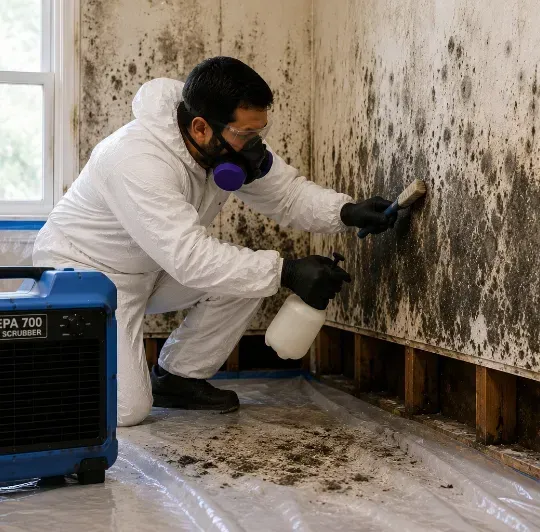
Containment helps prevent mold spores and contaminated dust from spreading into clean areas of the home. Depending on the project, professionals may use plastic barriers, sealed openings, negative air pressure, and HEPA air filtration equipment.
The exact containment method depends on the remediation protocol and the conditions at the property. TDLR inspection guidance specifically addresses containment, air pressure, PPE, signage, and other worksite requirements for regulated remediation projects.
Proper containment is one reason professional remediation is different from simply spraying a cleaning product on visible mold.
Step 5: Remove or Clean Contaminated Materials
After the area has been prepared, the actual mold removal begins.
Some materials can be cleaned and restored. Others may have absorbed too much moisture or mold contamination and may need to be removed. Porous materials such as heavily contaminated drywall, insulation, and carpeting can be difficult to clean completely.
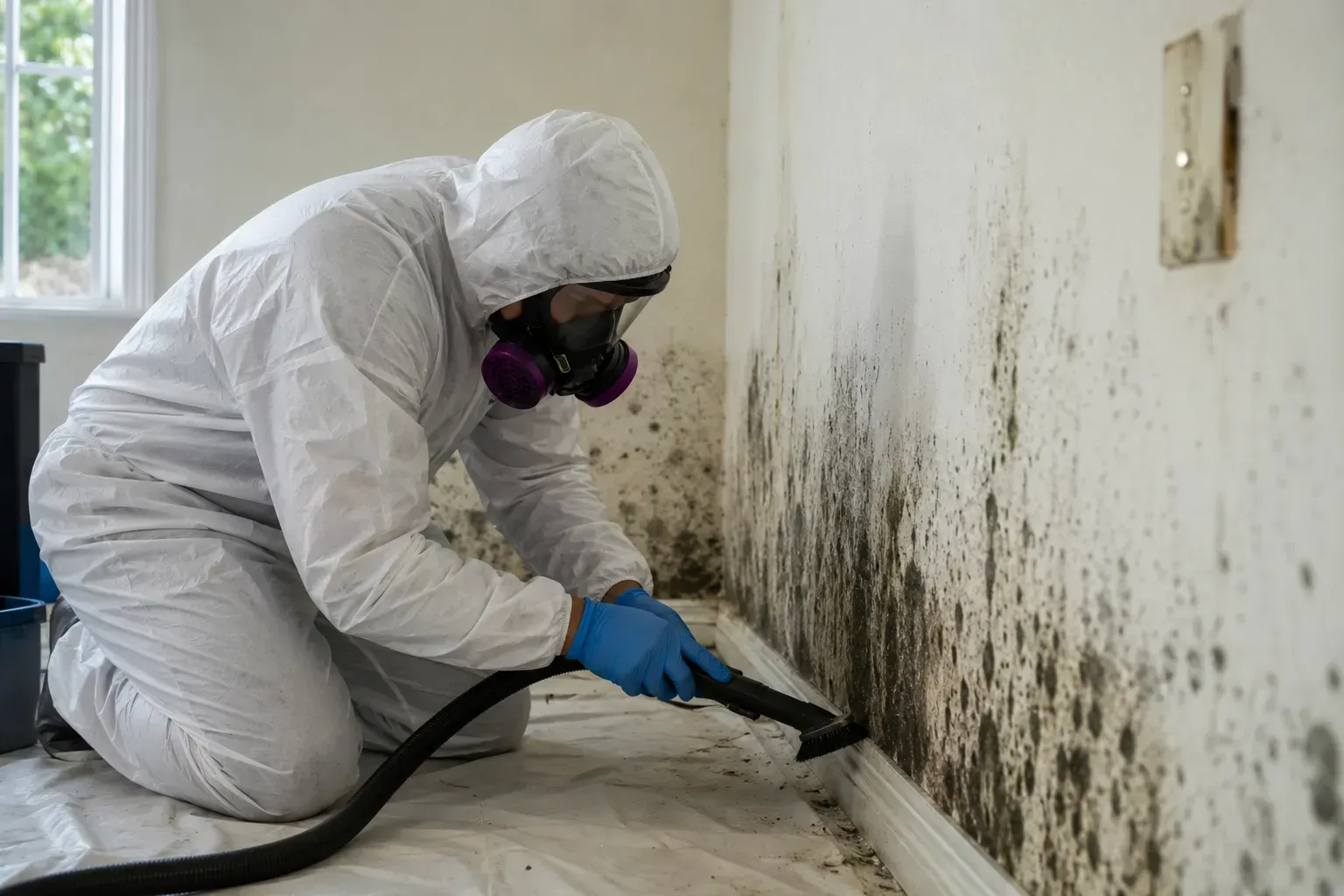
Professionals use appropriate cleaning methods and equipment based on the materials involved. HEPA vacuuming and other specialized procedures may be used to remove mold particles while reducing the chance of spreading contamination.
The goal is to remove the contamination safely rather than simply covering it with paint or another product.
Step 6: Address the Moisture Source
Removing mold is only part of the solution. The moisture problem that caused the growth also needs attention.
A leaking pipe, damaged roof, overflowing appliance, poor ventilation, or ongoing humidity can create conditions where mold grows again. If the source is not corrected, even a professionally cleaned area may develop another mold problem.
This is why experienced mold remediation services look beyond the visible growth. The team needs to understand why the area became damp in the first place and determine whether additional repairs or drying are needed.
Step 7: Dry the Affected Areas
Water and moisture control are important parts of the mold remediation process.
If walls, flooring, insulation, or structural materials remain damp, they may continue supporting mold growth. Professional drying equipment such as air movers and dehumidifiers can help remove trapped moisture.
Technicians may monitor moisture levels during this stage to determine whether materials are drying properly. The amount of time required depends on the extent of the water damage, the materials involved, temperature, humidity, and airflow.
A property should not simply be considered finished because the visible mold has disappeared. The affected area also needs to be properly dried and stabilized.
Step 8: Clean the Work Area
Once contaminated materials have been removed and affected surfaces have been treated, the work area needs to be cleaned.
Professionals may use HEPA vacuums and other appropriate cleaning methods to remove remaining dust and mold particles. Containment equipment is not removed until the work area has been properly addressed according to the remediation plan.
This stage helps prepare the property for the next step and reduces the chance of leaving behind contamination from the remediation work itself.
Step 9: Clearance and Final Review
The final stage depends on the project and the applicable Texas requirements.
For regulated remediation projects, clearance procedures are performed by a licensed mold assessment consultant according to the applicable protocol. TDLR's inspection guidance states that clearance procedures are to be performed by a licensed mold assessment consultant.
The final review helps determine whether the remediation work has been completed according to the applicable requirements. Depending on the project, documentation may also be important for property owners, insurance matters, or future real estate transactions.
What Does TDLR Licensed Mold Remediation Mean?
You may have seen companies advertise TDLR Licensed mold remediation and wondered what that means.
Texas regulates mold assessment and remediation professionals through TDLR. A mold remediation company must have a licensed mold remediation contractor serving as its responsible person, and individual mold remediation contractors must meet TDLR licensing requirements.
However, not every mold situation is regulated in exactly the same way. TDLR lists exemptions for certain properties and smaller projects. For example, in many circumstances, visible mold affecting less than 25 contiguous square feet may be handled without a mold remediation license. There are also exemptions involving certain residential properties with fewer than 10 dwelling units.
Because the rules can depend on the property and project, homeowners should verify that the professional they hire is properly licensed for the work being performed.
How Long Does the Mold Remediation Process Take?
There is no single timeline for every mold remediation project.
A small, contained problem may be completed relatively quickly, while widespread mold combined with water damage can require several days or longer. Drying, removal of damaged materials, repairs, and clearance procedures can all affect the schedule.
The best way to get an accurate timeline is to have the property assessed first. Once the extent of the contamination and moisture damage is known, the mold remediation contractor can explain the expected steps and estimated schedule.
Why Hire Professional Mold Remediation Services?
Trying to clean a large mold problem yourself can create additional challenges. Disturbing contaminated materials may spread mold particles into other areas of the home, while surface cleaning may leave hidden contamination or moisture behind.
Professional mold remediation services use specialized equipment, containment procedures, and established work practices to manage the project more carefully.
A qualified team can also help identify moisture problems that may not be obvious to a homeowner. Most importantly, working with the appropriate licensed professionals helps ensure that regulated Texas mold work is handled according to the applicable requirements.
What Should You Ask Before Hiring a Mold Remediation Contractor?
Before hiring a company, homeowners should take a few minutes to understand who will be performing the work and what the project includes.
Ask about:
- The contractor's current TDLR license and qualifications
- The planned scope of work and containment methods
- How moisture and contaminated materials will be handled
- What documentation or clearance procedures apply
- Whether the company has experience with similar Texas properties
These questions can help you compare contractors and avoid choosing a company based only on the lowest price.
Conclusion
The mold remediation process involves much more than removing visible mold. A proper project may include inspection, assessment, planning, containment, removal or cleaning, moisture control, drying, final cleaning, and clearance procedures when applicable.
For Texas homeowners, understanding TDLR requirements is also important. Some mold projects are regulated while specific exemptions apply, so the rules should be evaluated based on the property and the size and nature of the project.
Choosing qualified mold remediation services can make the process easier to understand and help ensure the work is handled properly from beginning to end.
If you’ve discovered mold in your Texas home, don’t wait for the problem to spread. Get in touch today to discuss your concerns and learn how professional mold remediation services can help you determine the right next step for your property.
Frequently Asked Questions
1. What are the main steps in the mold remediation process?
The mold remediation process generally includes inspection, determining the extent of contamination, creating a remediation plan, setting up containment, removing or cleaning affected materials, correcting the moisture source, drying the area, cleaning the work zone, and completing applicable clearance procedures.
2. Is mold remediation regulated in Texas?
Yes. Texas regulates mold assessment and remediation through TDLR. However, exemptions apply to certain properties and smaller projects, so licensing requirements depend on the specific situation. Homeowners should verify the requirements that apply to their property and project.
3. What does a mold remediation contractor do?
A mold remediation contractor oversees the remediation work and ensures the project follows the applicable remediation protocol and work plan. The contractor may supervise containment, removal, cleaning, drying, and other remediation activities required for the project.
4. Why should I choose professional mold remediation services?
Professional mold remediation services can help identify hidden moisture, contain contaminated areas, safely remove affected materials, and address conditions that could cause mold to return. Professionals also understand the Texas requirements that may apply to regulated remediation projects.
5. What does TDLR Licensed mold remediation mean?
TDLR Licensed mold remediation means the mold remediation work is being performed by professionals licensed under Texas's mold regulation program when licensing is required. TDLR licenses mold remediation contractors and companies and establishes minimum requirements for regulated mold-related work.
Best Option Restoration