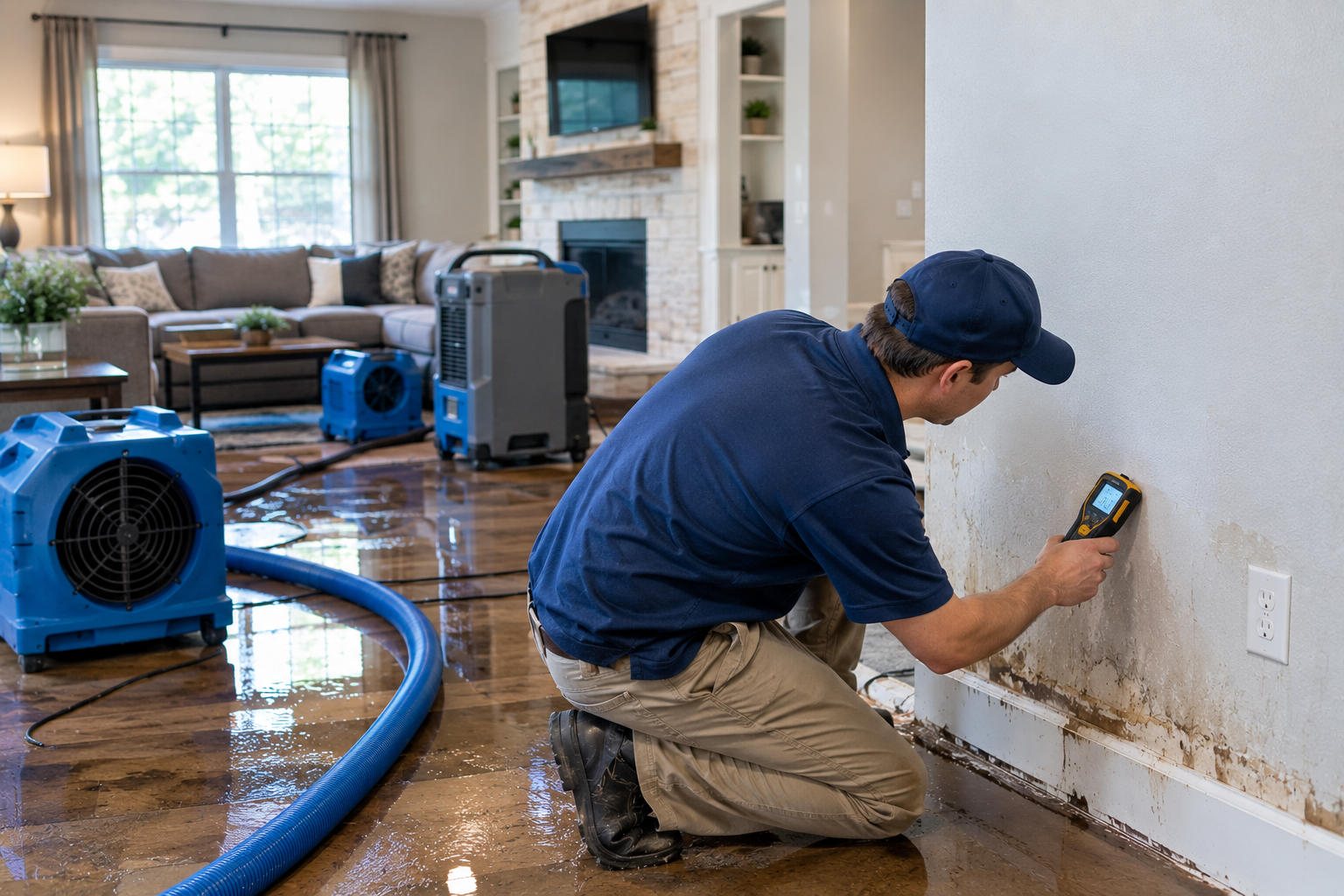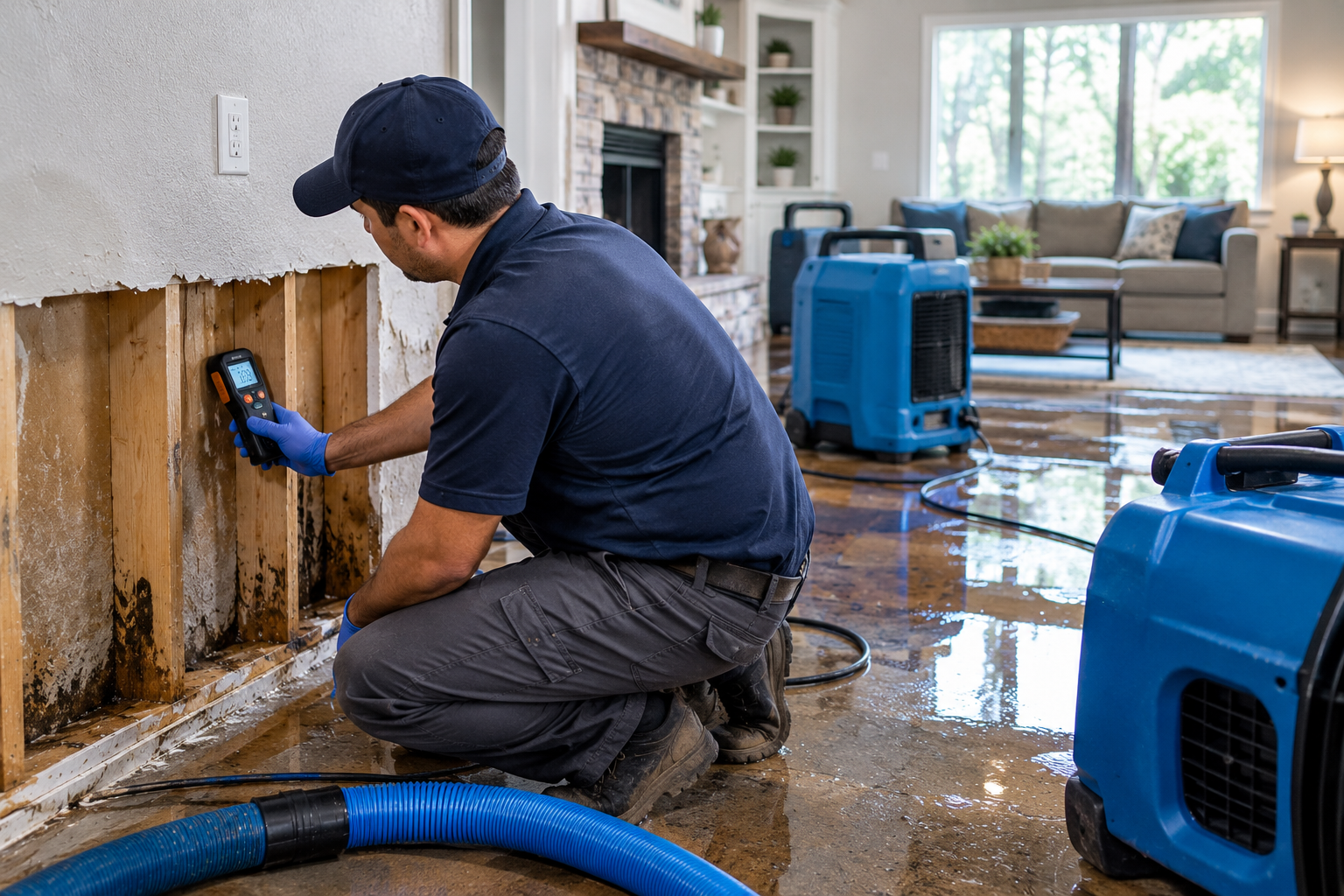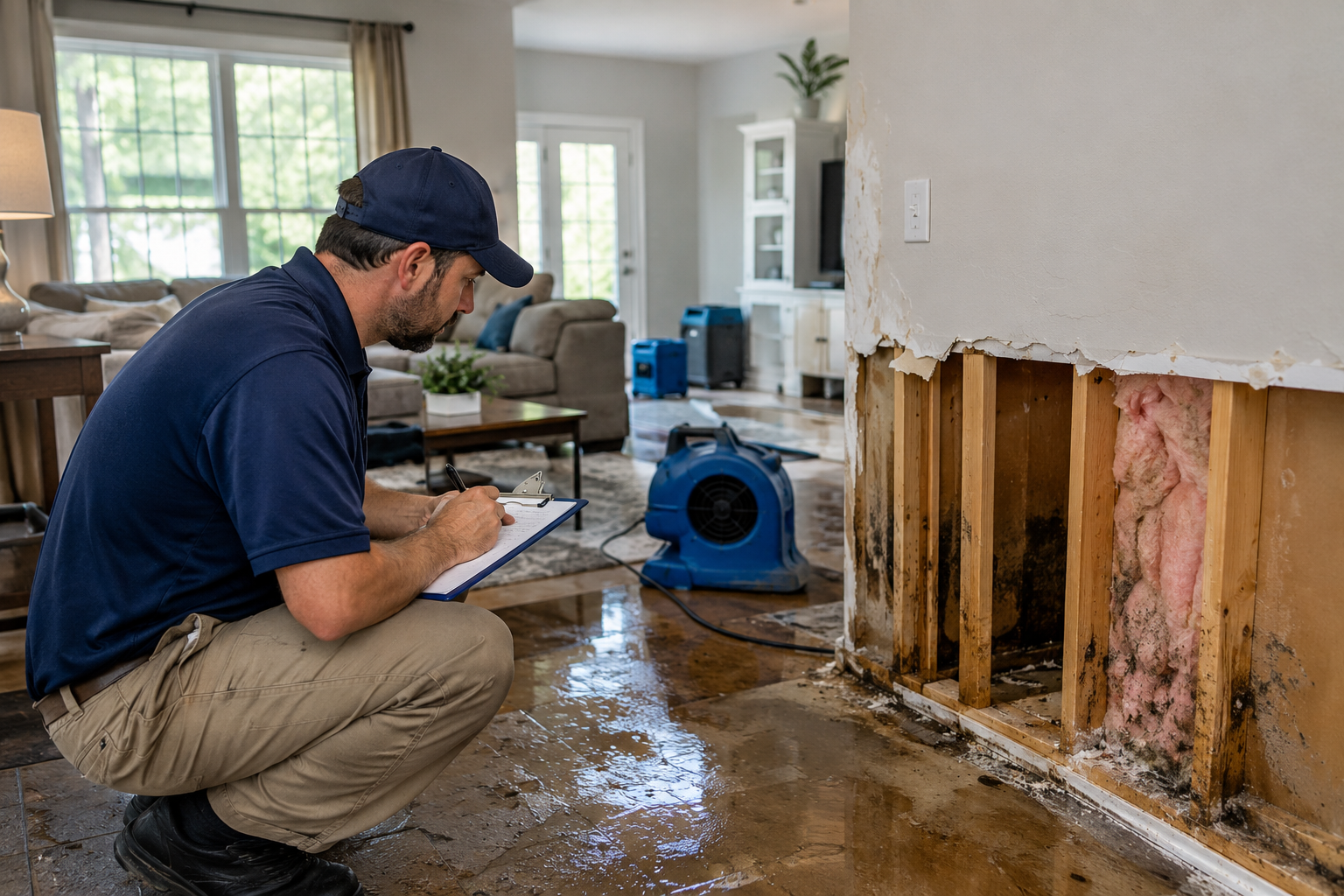
Have you ever walked into your home after a heavy Texas storm and noticed a musty smell that was not there before?
Many homeowners in Conroe experience this situation every year. A strong rainstorm passes through, everything seems fine at first, and then days later signs of moisture begin to appear. Maybe a ceiling stain develops. Perhaps the carpet feels damp. Sometimes the only clue is an unusual odor that does not go away.
What many people do not realize is that mold can begin growing within 24 to 48 hours when moisture remains trapped inside building materials. This is why mold remediation services in Conroe are often needed after heavy rain. Acting early can help prevent mold from spreading and causing costly damage.
Understanding mold risks after heavy rain is important for homeowners. Knowing what signs to watch for and when to seek professional help can protect your home, indoor air quality, and long-term property value.
Why Heavy Rain Creates Mold Problems in Conroe
Conroe experiences frequent storms, high humidity, and seasonal rainfall throughout the year. These conditions create the perfect environment for moisture-related problems.
Even when rainwater does not enter your home directly, elevated humidity levels can allow moisture to build up in areas with poor ventilation. If water intrusion occurs through a roof leak, damaged flashing, window gaps, or plumbing issues, mold growth can begin quickly.
Many homeowners assume that once standing water is removed, the problem is solved. Unfortunately, moisture often remains hidden inside drywall, wood framing, insulation, and flooring materials.
When these materials stay damp, mold has everything it needs to grow.
How Mold Starts After Water Intrusion
Mold requires three conditions to develop:
- Moisture
- Organic material
- Warm temperatures
Homes naturally contain organic materials such as drywall, wood, paper backing, and insulation. Conroe's warm climate provides the heat mold needs. Once moisture is introduced, mold growth can begin surprisingly fast.
In many cases, mold starts developing before homeowners even realize there is a moisture problem.
This is why early detection is critical after heavy rain events.
Common Places Mold Appears After Storms
Not all mold growth is immediately visible. Some of the most serious contamination occurs in hidden areas of a home.
After heavy rain, professionals often discover mold in:
- Attics affected by roof leaks
- Interior walls near windows
- Behind cabinets and appliances
- Beneath flooring materials
- Around HVAC systems
- Inside crawl spaces
Because these areas are rarely inspected daily, mold can continue growing unnoticed for weeks or months.
Warning Signs You May Have Hidden Mold
Many homeowners expect mold to be obvious, but that is not always the case. The earliest signs are often subtle.
You may notice a musty odor that seems stronger in one room. Some homeowners begin experiencing allergy-like symptoms that improve when they leave the house. Others discover discoloration on walls, ceilings, or baseboards.
Additional warning signs include increased humidity indoors, peeling paint, warped flooring, and recurring moisture stains. If several of these symptoms appear after a storm, it may be time to investigate further.
Why Mold Is More Than a Cosmetic Problem
Some homeowners view mold as a simple cleaning issue. In reality, mold can affect both property conditions and indoor air quality.
As mold grows, it releases microscopic spores into the air. These spores can circulate throughout the home and settle on additional surfaces.
For some individuals, exposure may cause:
- Sneezing and congestion
- Eye irritation
- Persistent coughing
- Headaches
- Respiratory discomfort
Children, older adults, and individuals with asthma are often more sensitive to mold exposure.
Addressing the issue early helps prevent both structural damage and indoor air concerns.
The Hidden Cost of Waiting Too Long
One of the biggest mistakes homeowners make is delaying action after discovering water damage.
A small moisture issue can become a much larger remediation project if left untreated.
For example, a minor roof leak may initially affect only a small section of drywall. Over time, moisture can spread into insulation, framing, and adjacent rooms. The longer moisture remains, the greater the potential for mold growth.
What begins as a small repair can eventually require extensive remediation and restoration work.
This is why many homeowners search for mold remediation near me shortly after major storms. Early intervention often reduces both damage and costs.
Why Professional Inspections Matter
Visual inspections are helpful, but they do not always tell the full story.
Moisture often remains hidden behind finished surfaces. Professional inspectors use specialized equipment to identify areas that may not be visible during a standard walkthrough.
These inspections may include moisture mapping, infrared imaging, humidity measurements, and detailed evaluations of vulnerable building materials.
The goal is not simply to locate visible mold. The goal is to identify the source of moisture and determine how far the problem has spread. Without addressing the source, mold often returns.
Understanding the Mold Remediation Process
Many homeowners confuse mold remediation with basic cleaning.
Professional remediation focuses on identifying contamination, controlling moisture, and restoring affected areas safely.
A typical remediation process may involve:
- Inspecting affected areas
- Identifying moisture sources
- Establishing containment zones
- Removing contaminated materials when necessary
- Cleaning affected surfaces
- Drying the structure thoroughly
- Verifying successful remediation
The process is designed to address both the mold itself and the conditions that allowed it to grow.
How Mold Remediation Services in Conroe Help Homeowners
Working with experienced professionals provides several important benefits.
First, they understand local weather conditions and common moisture issues affecting Conroe properties. They know where water typically enters structures and which areas are most vulnerable after storms.
Second, they have specialized equipment that helps identify hidden moisture before it creates larger problems.
Third, professional remediation provides a systematic approach that focuses on long-term solutions rather than temporary fixes.
Many homeowners turn to mold remediation services in Conroe because they want confidence that the issue has been addressed properly.
Why DIY Mold Cleanup Often Falls Short
Small surface mold growth may seem easy to clean, but visible mold is often only part of the problem.
Homeowners may remove staining from a wall without realizing that moisture remains trapped behind it. As a result, mold can continue growing inside the structure even after the visible area looks clean.
DIY cleaning also does not address hidden contamination or moisture migration. For this reason, larger mold issues generally require professional evaluation and remediation.
Protecting Your Home After Heavy Rain
Preventing mold starts with moisture control. After major storms, homeowners should inspect vulnerable areas carefully.
Pay close attention to roofing systems, attic spaces, windows, plumbing fixtures, and HVAC components. Even small leaks should be addressed immediately.
Maintaining proper ventilation is equally important. Bathrooms, kitchens, and laundry areas generate moisture that can contribute to mold growth if airflow is inadequate.
Routine maintenance remains one of the most effective ways to reduce future mold risks.
What Home Buyers and Sellers Should Know
Mold issues can also affect real estate transactions. Buyers increasingly ask questions about moisture history, water damage, and indoor air quality before purchasing a property.
Sellers who address mold concerns proactively often experience smoother transactions and fewer surprises during inspections.
Documentation showing that remediation was completed properly can help build buyer confidence and protect property value.
When Should You Contact a Professional?
Not every moisture issue requires major remediation. However, certain situations should be evaluated by a professional.
Consider seeking help if:
- Water intrusion occurred after a storm
- Musty odors persist
- Mold returns repeatedly
- You notice staining or discoloration
- Family members experience unexplained allergy symptoms
If you are concerned about potential mold growth after heavy rain, you can visit our contact page to connect with professionals who can evaluate your property and recommend the next steps.
Why Fast Action Protects Your Investment
Your home is one of your largest investments. Allowing moisture problems to continue can lead to expensive repairs and long-term property damage.
The sooner mold issues are identified, the easier they are typically to address. Professional inspections, prompt repairs, and proper remediation help preserve indoor air quality, protect structural components, and reduce future costs.
For homeowners throughout Conroe, staying proactive after heavy rain is one of the smartest ways to protect both property value and family comfort.
Conclusion
Heavy rain can create mold problems long before visible signs appear. Moisture hidden behind walls, under flooring, or inside insulation can allow mold to grow quickly if conditions are right.
Understanding the warning signs and acting early can help prevent larger issues later.
Whether you are dealing with recent storm damage, unexplained odors, or visible mold growth, professional evaluation can provide clarity and peace of mind.
If you suspect moisture-related problems in your home, the team at Best Option Restoration can help assess the situation and recommend the right next steps. You can also visit our contact page to connect with experienced professionals and learn more about available mold remediation services in Conroe.
Taking action early can help prevent small moisture issues from turning into costly mold damage and extensive repairs.
FAQs (Frequently Asked Questions)
1. How soon can mold grow after heavy rain?
Mold can begin growing within 24 to 48 hours when moisture remains trapped inside building materials and temperatures are warm.
2. What are the first signs of mold after water damage?
Common signs include musty odors, discoloration on walls or ceilings, increased indoor humidity, allergy symptoms, and visible water stains.
3. When should I call mold remediation services in Conroe?
You should consider professional evaluation if your property experienced water intrusion, persistent moisture, recurring mold growth, or signs of hidden contamination.
4. Can mold grow behind walls after a storm?
Yes. Moisture can become trapped inside wall cavities, insulation, and framing materials, allowing mold growth even when surfaces appear dry.
5. How do professionals find hidden mold?
Professionals often use moisture meters, thermal imaging equipment, humidity measurements, and detailed inspections to locate hidden moisture and mold growth.
6. Are mold remediation services worth it?
Professional remediation helps identify moisture sources, remove contamination safely, and reduce the risk of mold returning in the future.
7. How can I prevent mold after heavy rain?
Address leaks quickly, improve ventilation, control indoor humidity, inspect vulnerable areas regularly, and dry wet materials as soon as possible.
Best Option Restoration