Water damage can happen when you least expect it. A leaking pipe, broken water heater, heavy rain, or storm can quickly leave floors, walls, and ceilings wet. In The Woodlands, homeowners may also deal with drainage issues, roof leaks, and storm-related water intrusion.
Knowing what to do after water damage can help reduce additional problems. The sooner the source is controlled and affected areas are assessed, the easier it may be to prevent moisture from spreading into building materials.
This guide explains the common causes of water damage in The Woodlands, what homeowners should do after a water loss, and when professional water damage restoration The Woodlands services may be appropriate.
Common Causes of Water Damage in The Woodlands
Water damage can come from many sources. Some problems happen suddenly, while others develop slowly and remain unnoticed until visible damage appears.
Common causes include:
- Burst or leaking pipes
- Water heater failures
- Washing machine or dishwasher leaks
- Roof leaks
- Heavy rain and storms
- Overflowing toilets or sinks
- HVAC condensation and drainage problems
- Water entering through windows or other openings
The Woodlands has a mix of established neighborhoods and newer homes, so plumbing systems, roofing materials, and drainage conditions can vary from property to property.
A small leak should not automatically be ignored. Water can travel through walls, floors, ceilings, and other areas before the damage becomes visible.
What to Do After Water Damage
Your first priority should be safety. If you can safely identify the source of the water, shut it off at the appropriate valve. If water has reached electrical outlets, appliances, or electrical equipment, avoid contact with those systems and seek professional assistance.
Once the immediate hazard has been addressed, document the affected areas with photos and videos. Record what happened and which rooms or materials appear to be damaged.
If there is standing water or significant moisture, consider professional help rather than waiting for the area to dry on its own. Fast action can help reduce the chance of additional damage.
Professional water mitigation can involve water extraction, moisture assessment, air movement, dehumidification, and other measures based on the condition of the property.
Storm & Rain Damage
Heavy rain and storms can create water problems in homes throughout The Woodlands. Roof damage, clogged drainage systems, damaged flashing, and water intrusion around windows or other openings can allow rainwater to enter a property.
Storm-related water damage may affect ceilings, walls, flooring, insulation, and personal belongings. Water can also move into areas that are not immediately visible.
After a storm, check for visible signs such as water stains, bubbling paint, damp drywall, wet flooring, or musty odors. Do not climb onto a damaged roof or enter an unsafe area to inspect it yourself.
If your property has experienced storm-related water intrusion, emergency water restoration can help address active or recent water damage and begin the assessment process.
Plumbing Leaks
Plumbing problems are another common source of water damage. A burst supply line can release a large amount of water quickly, while a slow leak under a sink or behind a wall may go unnoticed for much longer.
Common warning signs include:
- Unexplained water stains
- Damp or discolored walls
- Peeling or bubbling paint
- Musty odors
- Unusually high water bills
- Soft or warped flooring
Even a small plumbing leak can cause hidden moisture behind cabinets, walls, or flooring.
If a leak has affected building materials, a professional assessment can help determine whether the area needs water extraction, drying, material removal, or other restoration work.
Hidden Water Damage
One of the biggest challenges with water damage is that visible moisture may not show the full extent of the problem.
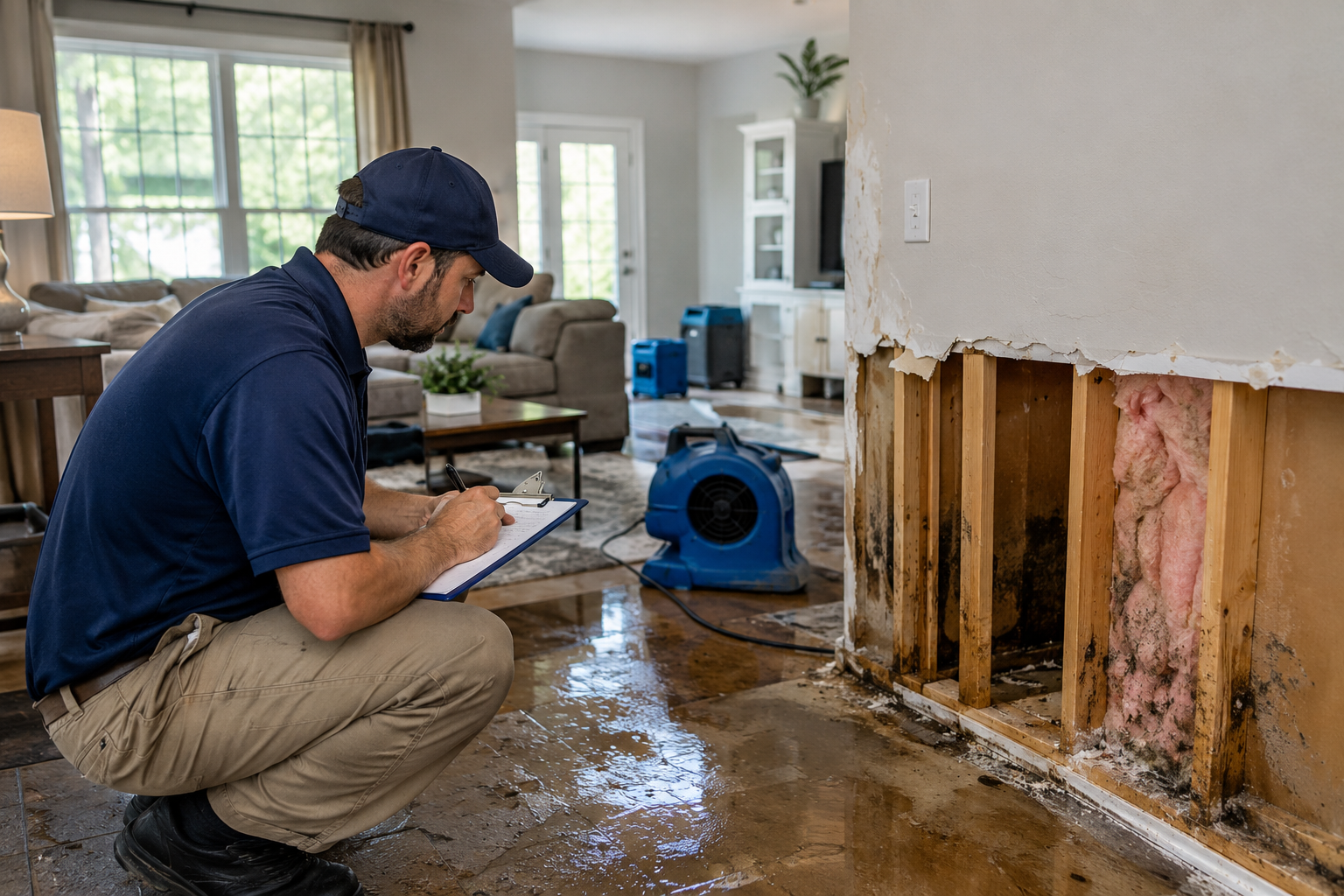
Water can move behind drywall, underneath flooring, into cabinets, and around insulation. Materials may remain damp even after standing water has been removed.
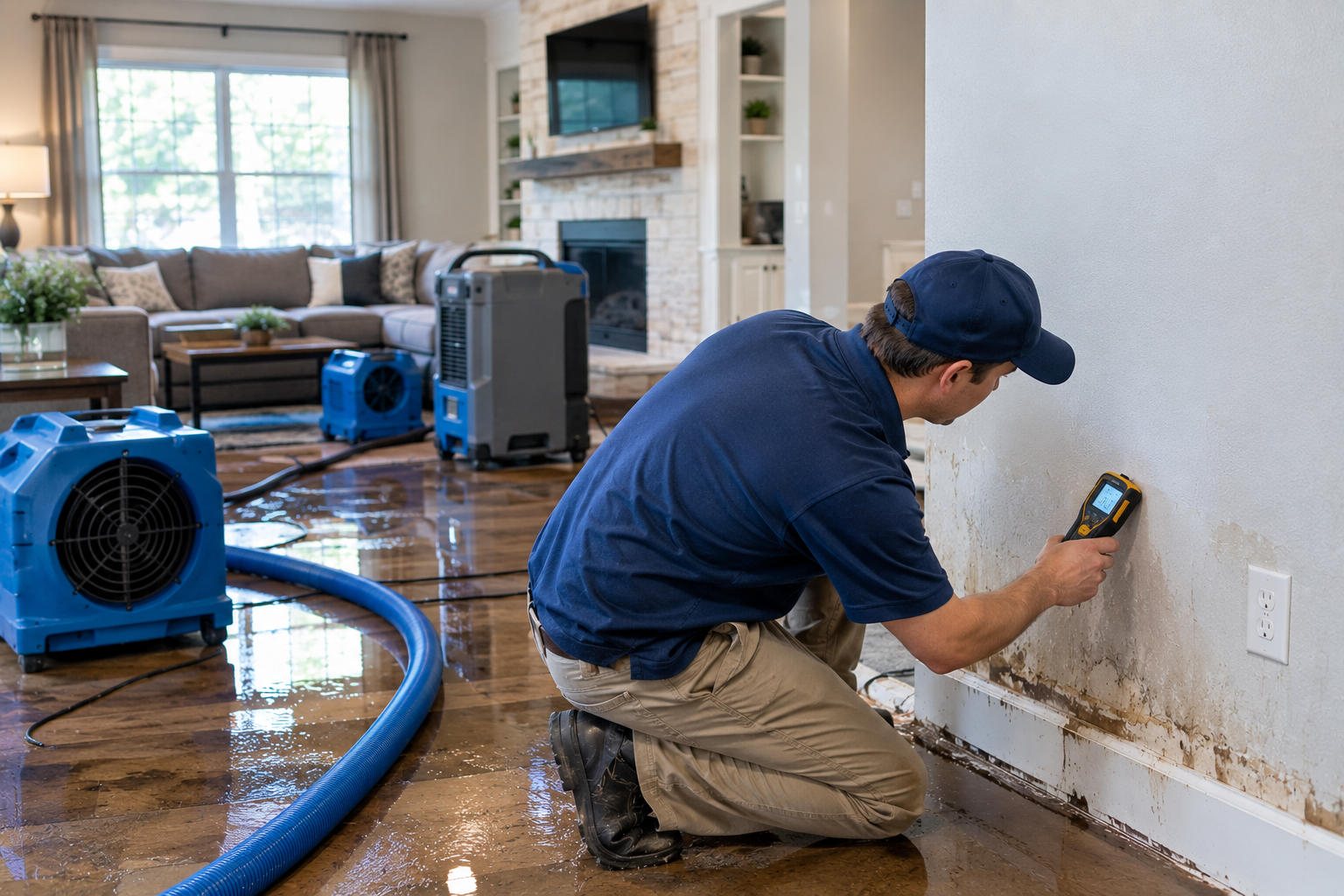
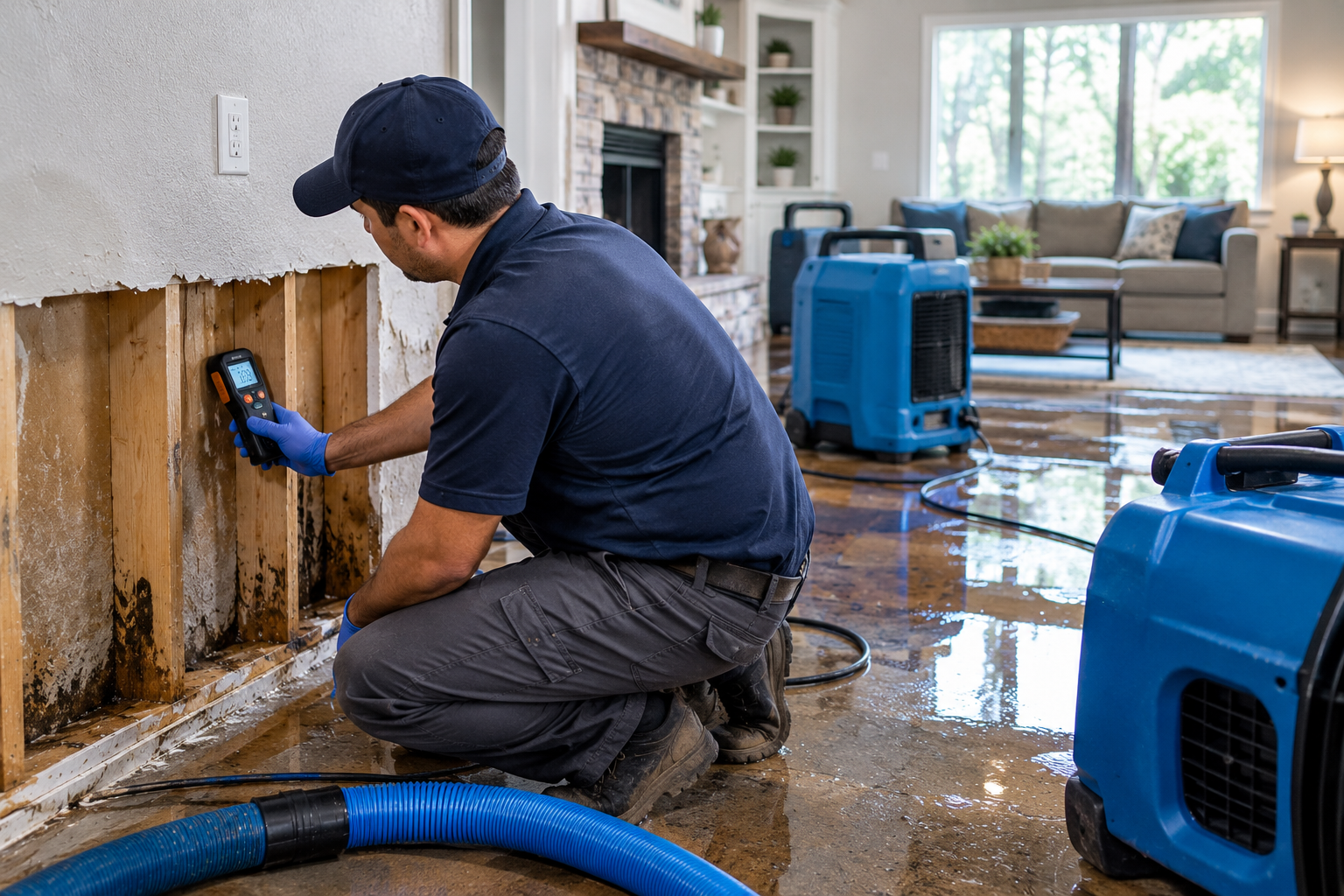
Professionals can use moisture meters and other tools to identify areas that may require additional attention.
Structural drying is especially important when moisture has entered building materials. Air movers and dehumidifiers may be used to help remove moisture, while monitoring equipment can track drying progress.
The exact drying process depends on the amount of water, affected materials, humidity, airflow, and how long the materials have been exposed.
Mold After Water Damage
Mold can become a concern when moisture remains in a property. Damp drywall, insulation, flooring, and other materials can create conditions that support mold growth.
A musty smell, visible growth, or recurring moisture problem should not be ignored.
However, not every water-damaged property will automatically develop mold. The risk depends on factors such as moisture levels, temperature, materials, and how quickly the area is dried.
If mold is discovered after a water loss, professional mold remediation may be needed depending on the size and nature of the problem.
Addressing the moisture source is an important part of the process. Cleaning visible mold without correcting the underlying water problem may allow the issue to return.
Insurance and Water Damage
Homeowners should review their insurance policy and understand how it addresses different types of water damage.
Coverage can depend on the cause of the loss. For example, sudden and accidental water damage may be treated differently from flooding, long-term leaks, or maintenance-related problems.
If you plan to file a claim, document the property before major cleanup whenever it is safe to do so. Take photos and videos of affected rooms, materials, furniture, appliances, and other damaged belongings.
Keep copies of estimates, invoices, receipts, inspection reports, and communications with your insurance company.
Do not assume that every water-related loss is covered. Your insurer can explain how your individual policy applies to the specific event.
When to Call a Water Damage Restoration Professional
Some water problems can be addressed with simple repairs, but professional assistance may be appropriate when the damage is extensive or difficult to assess.
Consider professional help if there is standing water, widespread moisture, water inside walls or ceilings, damaged flooring, a persistent musty odor, or significant storm or plumbing damage.
Professional water damage restoration in The Woodlands can involve several steps, including water extraction, moisture assessment, drying, cleaning, and repairs.
It is also important to act quickly after a water loss. Waiting too long can allow moisture to spread into additional materials and make restoration more complicated.
Areas Served Around The Woodlands
Water damage can affect homeowners throughout The Woodlands and surrounding North Houston communities.
Depending on the location and service needed, restoration services may be available in nearby areas such as Spring, Conroe, Montgomery, Magnolia, Willis, and other communities in the surrounding region.
Local service knowledge can be useful when responding to storm-related water intrusion, plumbing failures, and other property damage.
If you are dealing with water damage in The Woodlands or a nearby North Houston community, contact Best Option Restoration to discuss your situation and determine the appropriate next step.
How Water Damage Restoration Works
The restoration process depends on the source and severity of the damage. A typical project may begin with an inspection to identify the source of water and determine which areas have been affected.
Standing water may then be extracted, followed by drying and moisture monitoring. Damaged materials may be cleaned, restored, or removed depending on their condition.
Once the property is dry and the affected areas have been addressed, repairs can begin. This may include replacing drywall, flooring, insulation, trim, or other damaged components.
The goal is not simply to remove visible water. Proper restoration also addresses moisture that may be hidden inside building materials.
Final Thoughts
Water damage can develop quickly, especially after a major leak, plumbing failure, or storm. For homeowners searching for water damage restoration The Woodlands, understanding the first steps can make the situation easier to manage.
Start by making the property safe, stopping the water source when possible, documenting the damage, and addressing moisture as soon as reasonably possible.
Professional restoration can help with water extraction, water mitigation, structural drying, and repairs. If mold develops after a water loss, additional mold remediation may also be necessary.
If your home has experienced water damage, contact Best Option Restoration to discuss the situation and learn what restoration services may be appropriate for your property.
Frequently Asked Questions
What should I do after water damage in The Woodlands?
First, make sure the property is safe and stop the water source if you can do so safely. Document the damage with photos and videos, then arrange a professional assessment if there is standing water, hidden moisture, or significant damage.
What causes water damage in The Woodlands, TX?
Common causes include plumbing leaks, burst pipes, water heater failures, roof leaks, heavy rain, storms, appliance leaks, HVAC drainage problems, and water entering through windows or other openings.
How quickly should water damage be addressed?
Water damage should be addressed as soon as reasonably possible. Moisture can spread into drywall, flooring, ceilings, insulation, and other materials. Prompt water mitigation and drying can help limit additional damage.
Can water damage cause mold in The Woodlands?
Yes. Mold can develop when moisture remains in building materials or indoor areas. Damp drywall, insulation, flooring, and other materials can create conditions that support mold growth. Addressing the moisture source and drying affected areas can help reduce the risk.
What is included in water damage restoration?
Water damage restoration may include inspection, water extraction, moisture assessment, water mitigation, structural drying, cleaning, removal of damaged materials, and repairs. The exact process depends on the source and severity of the water damage.
Best Option Restoration