Have you ever noticed a musty smell after a water leak and thought, "I'll deal with it next week"? Many homeowners do exactly that. Unfortunately, mold does not wait.
A small moisture problem can quickly turn into a serious mold infestation. What starts as a minor issue behind a wall or under flooring can spread throughout a property in just a few days. The longer mold is allowed to grow, the more expensive and complicated the cleanup becomes.
This is why emergency mold remediation is so important. Acting quickly helps protect your property, indoor air quality, and overall repair costs. Whether the moisture comes from a burst pipe, roof leak, flood damage, or HVAC issue, immediate action can make a significant difference.
For homeowners, property managers, and business owners, understanding when mold becomes an emergency can help prevent major financial losses and health concerns.
Why Mold Problems Escalate So Quickly
Many people assume mold takes months to become a problem. In reality, mold can begin growing within 24 to 48 hours when moisture, organic material, and warm temperatures are present.
Texas properties are especially vulnerable because humidity levels remain high throughout much of the year. Once moisture becomes trapped inside walls, ceilings, insulation, or flooring, mold has everything it needs to spread.
The biggest challenge is that mold often grows out of sight. By the time visible signs appear, the contamination may already be affecting a much larger area.
This is why delaying remediation can become expensive. What could have been a small cleanup project may eventually require extensive removal of drywall, insulation, flooring, and other building materials.
What Qualifies as a Mold Emergency?
Not every mold issue requires immediate action, but certain situations should never be ignored.
A mold problem may be considered an emergency when:
- Water damage has recently occurred
- Mold is spreading rapidly
- Occupants are experiencing health symptoms
- Sewage backups or contaminated water are involved
- Commercial operations are being affected
When any of these conditions exist, professional intervention should happen as soon as possible.
Emergency situations often involve active moisture sources that continue feeding mold growth. Until the moisture issue is identified and corrected, the contamination will continue expanding.
Common Causes of Emergency Mold Situations
Many emergency remediation projects begin with a water-related event.
One of the most common causes is plumbing failure. A leaking pipe inside a wall can release moisture for weeks before anyone notices. During that time, mold can spread throughout surrounding materials.
Roof leaks are another major cause. Even a small opening in a roof can allow water intrusion during storms. Over time, moisture accumulates inside attics and ceilings, creating ideal mold conditions.
Flooding also creates serious mold risks. Whether caused by heavy rain, storm damage, or appliance failures, floodwater can saturate building materials quickly.
Other common causes include:
- HVAC condensation problems
- Overflowing sinks or tubs
- Water heater failures
- Poor ventilation
- High indoor humidity
Each of these situations can create conditions where mold grows rapidly if not addressed immediately.
The Hidden Costs of Waiting
One reason many property owners delay remediation is the hope that the problem will resolve itself. Unfortunately, mold never works that way.
When moisture remains present, mold continues spreading to new surfaces. The contamination becomes larger, cleanup costs increase, and more materials may need replacement.
Waiting can lead to:
- Higher remediation expenses
- Structural damage
- Reduced property value
- Longer repair timelines
- Greater disruption to daily life
For businesses, delays can be even more expensive. Mold contamination may affect operations, employee productivity, customer perception, and potential liability concerns.
The financial impact of waiting often exceeds the cost of addressing the problem immediately.
Health Concerns Associated with Mold Exposure
One reason emergency mold remediation is taken seriously is the potential effect on indoor air quality.
Mold releases microscopic spores into the air. These spores can travel throughout a property and be inhaled by occupants.
Common symptoms associated with mold exposure may include:
- Sneezing
- Nasal congestion
- Coughing
- Throat irritation
- Eye irritation
- Headaches
- Respiratory discomfort
People with asthma, allergies, or weakened immune systems may be especially sensitive.
Even when symptoms seem minor, prolonged exposure can create ongoing discomfort and affect quality of life. This is why mold issues should be addressed promptly rather than ignored.
What Happens During Emergency Mold Remediation?
Many property owners feel overwhelmed when they hear the term remediation. However, the process follows a structured approach designed to stop contamination and restore safe conditions.
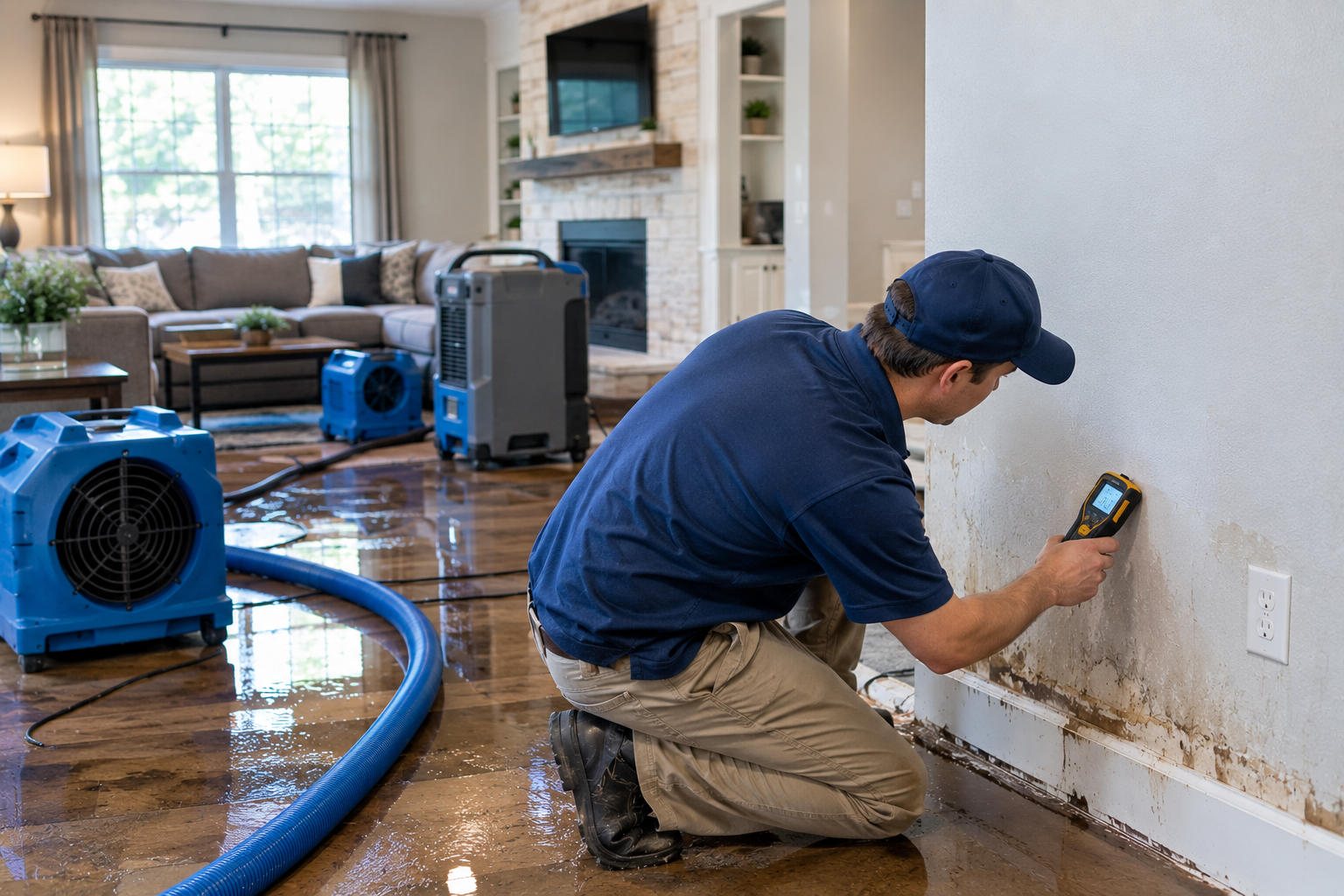
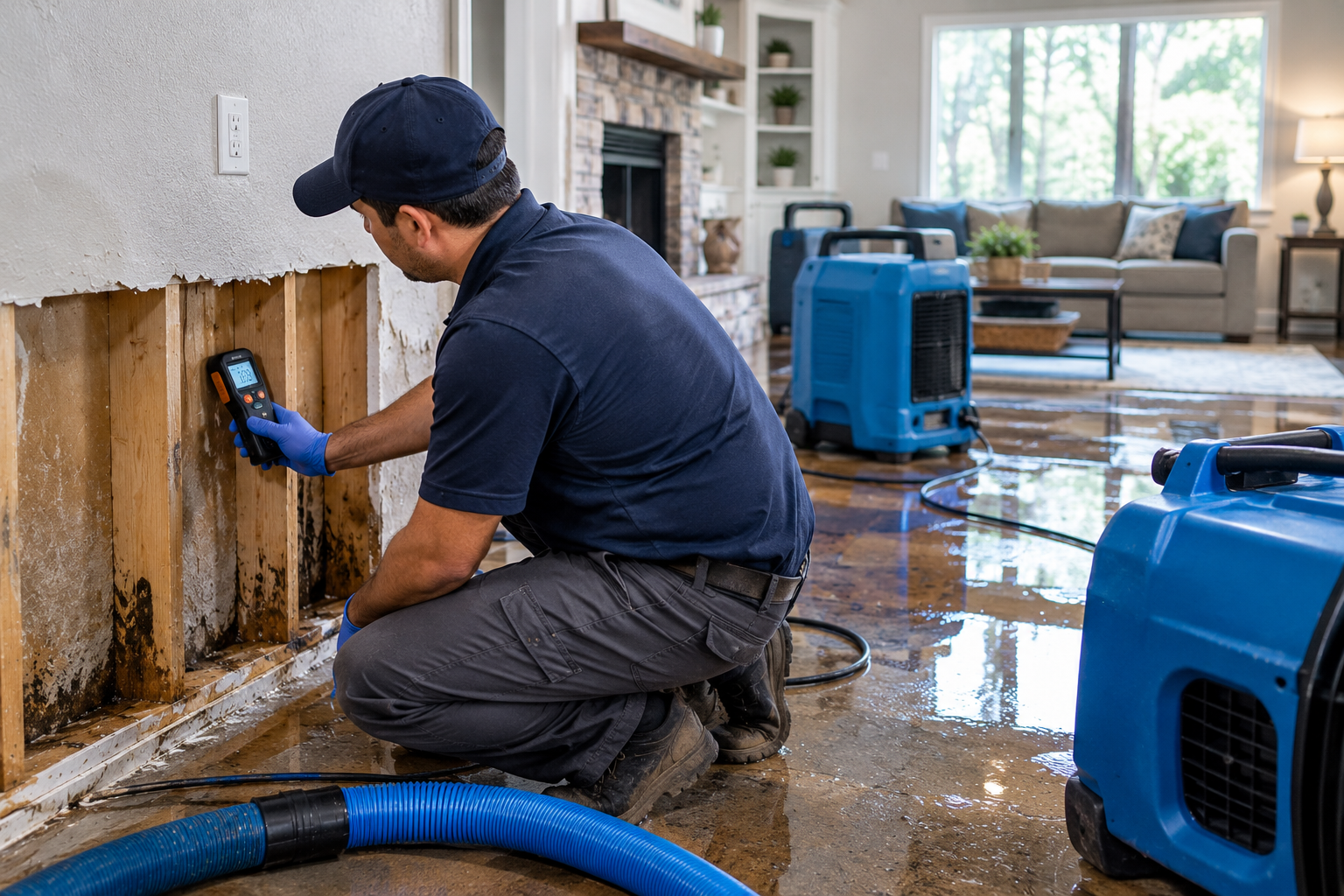
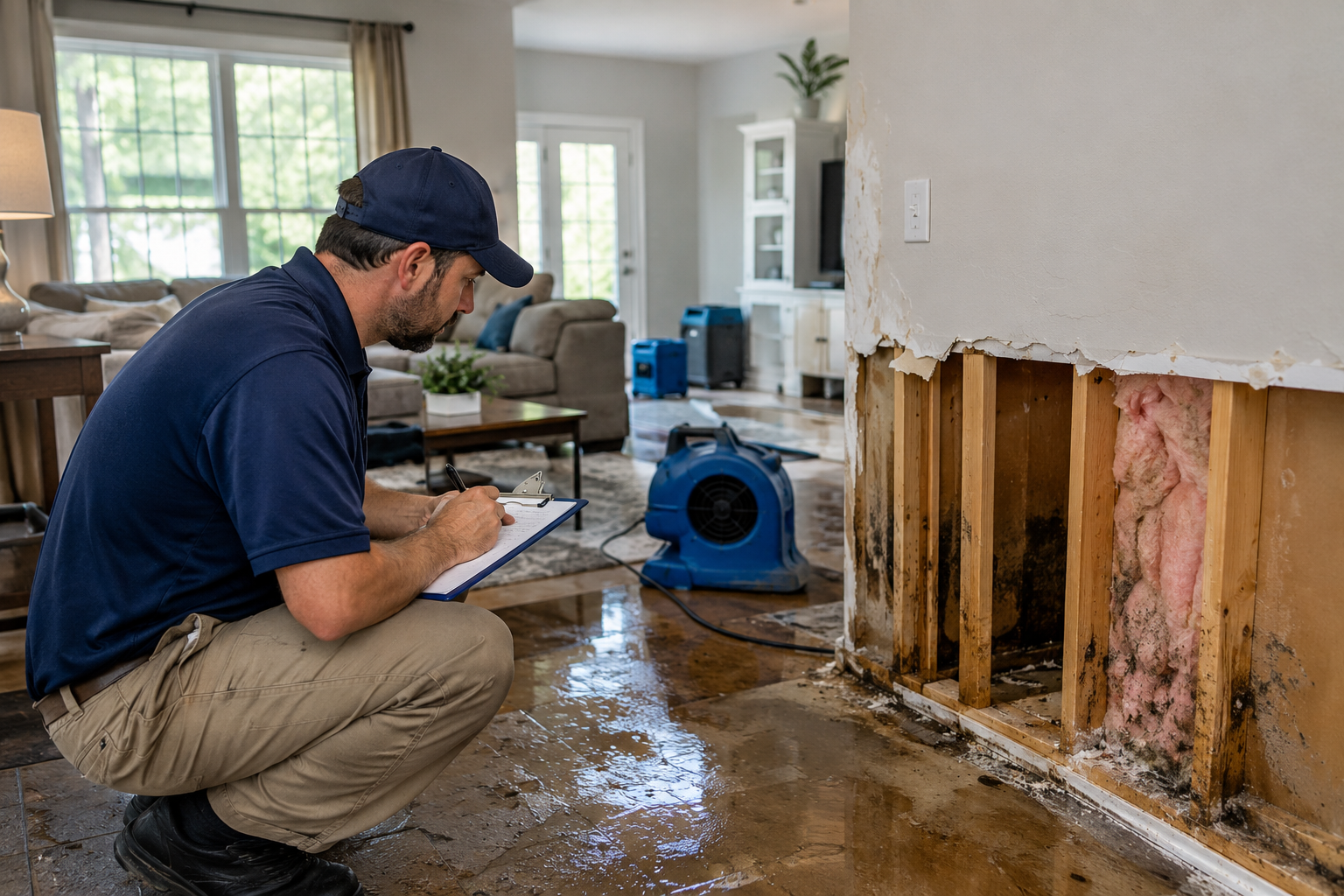
The first step is identifying the moisture source. Without correcting the source of water intrusion, mold will likely return. Next, professionals assess the affected areas to determine the extent of contamination.
Containment measures are then established to prevent spores from spreading into unaffected spaces. Specialized barriers and air filtration equipment help isolate the work area.
After containment is in place, damaged materials are removed or cleaned according to industry standards. The area is then thoroughly dried using professional equipment. Moisture monitoring continues until materials reach acceptable levels.
Finally, post-remediation verification helps confirm the project has been completed successfully.
This systematic process ensures the problem is addressed correctly rather than temporarily covered up.
Why DIY Mold Cleanup Often Fails
Many homeowners attempt to handle mold themselves using household cleaners.
While small surface mold issues may sometimes be manageable, larger contamination events require professional attention.
The biggest problem with DIY cleanup is that visible mold is often only a small portion of the actual issue.
Mold frequently extends behind walls, under flooring, and inside insulation. Cleaning only what can be seen leaves hidden contamination behind.
Improper cleaning methods can also spread spores throughout the property, making the situation worse.
Professional mold remediation services use specialized equipment, containment procedures, and moisture detection tools that most homeowners do not have access to.
Why Professional Response Matters
When mold becomes an emergency, experience matters.
Professional teams understand how mold behaves, where moisture hides, and how contamination spreads through buildings.
A qualified remediation specialist can quickly identify problem areas and develop an effective remediation plan. This approach reduces guesswork and helps prevent recurring mold issues.
Many property owners searching for mold remediation services are looking for fast response times because every hour matters when active moisture is present. The sooner remediation begins, the more damage can often be prevented.
How Emergency Mold Remediation Protects Property Value
Property value can be significantly affected by unresolved mold issues.
Buyers today are increasingly aware of indoor environmental concerns. Visible mold, musty odors, or documented moisture problems can create hesitation during real estate transactions.
By addressing issues quickly, property owners demonstrate responsible maintenance and reduce long-term concerns.
Professional documentation can also provide reassurance that the issue was handled correctly.
For both residential and commercial properties, fast action often protects market value and reduces future complications.
The Importance of Moisture Control
One of the biggest misconceptions about mold is that removing visible growth solves the problem.
In reality, moisture control is the foundation of successful remediation.
Without addressing the underlying moisture source, mold often returns.
Professionals focus heavily on identifying why moisture developed in the first place. This may involve plumbing inspections, roof evaluations, humidity monitoring, or HVAC assessments.
Long-term prevention depends on solving the root cause rather than simply removing the symptoms.
Choosing the Right Mold Remediation Team
Not all contractors have the same level of experience when dealing with emergency situations.
Property owners should look for professionals who understand remediation procedures, moisture management, and industry standards.
Important factors include:
- Experience with emergency projects
- Fast response capability
- Detailed inspection process
- Proper containment procedures
- Clear communication
If you are dealing with a suspected mold emergency, you can visit our contact page to connect with professionals who can evaluate the situation and recommend the appropriate next steps.
Many homeowners trust Best Option Restoration because they understand the urgency of water damage and mold-related situations and respond quickly when immediate action is needed.
When Should You Call Immediately?
Certain warning signs should never be ignored.
If you notice a strong musty odor, visible mold growth, recent flooding, persistent leaks, or increasing allergy symptoms indoors, professional evaluation should happen as soon as possible.
Even if mold is not visible, moisture issues often indicate hidden risks.
Early action almost always results in lower costs and easier remediation compared to waiting weeks or months.
Conclusion
Mold problems rarely improve on their own. In fact, the opposite is usually true. The longer moisture remains present, the larger and more expensive the problem becomes.
Understanding the importance of emergency mold remediation can help homeowners and business owners protect their property, finances, and indoor environment.
Fast action limits damage, improves air quality, and reduces the likelihood of extensive repairs later.
If you suspect mold growth after a leak, flood, or moisture issue, don't wait for the problem to get worse. You can connect through our contact page to learn more about professional assessment and remediation options before a small issue becomes a major expense.
FAQs (Frequently Asked Questions)
1. What is emergency mold remediation?
Emergency mold remediation is the rapid response process used to contain, remove, and prevent mold growth after water damage, leaks, flooding, or other moisture-related events.
2. How quickly can mold grow after water damage?
Mold can begin growing within 24 to 48 hours when moisture, organic materials, and warm temperatures are present.
3. When should I search for mold remediation services near me?
You should contact professionals immediately after discovering water damage, visible mold growth, musty odors, or unexplained moisture problems.
4. Can I clean emergency mold problems myself?
Small surface mold may sometimes be cleaned safely, but larger contamination often requires professional equipment, containment procedures, and moisture control strategies.
5. Why is emergency mold remediation important?
Emergency remediation helps prevent mold from spreading, reduces repair costs, protects indoor air quality, and minimizes property damage.
Best Option Restoration